



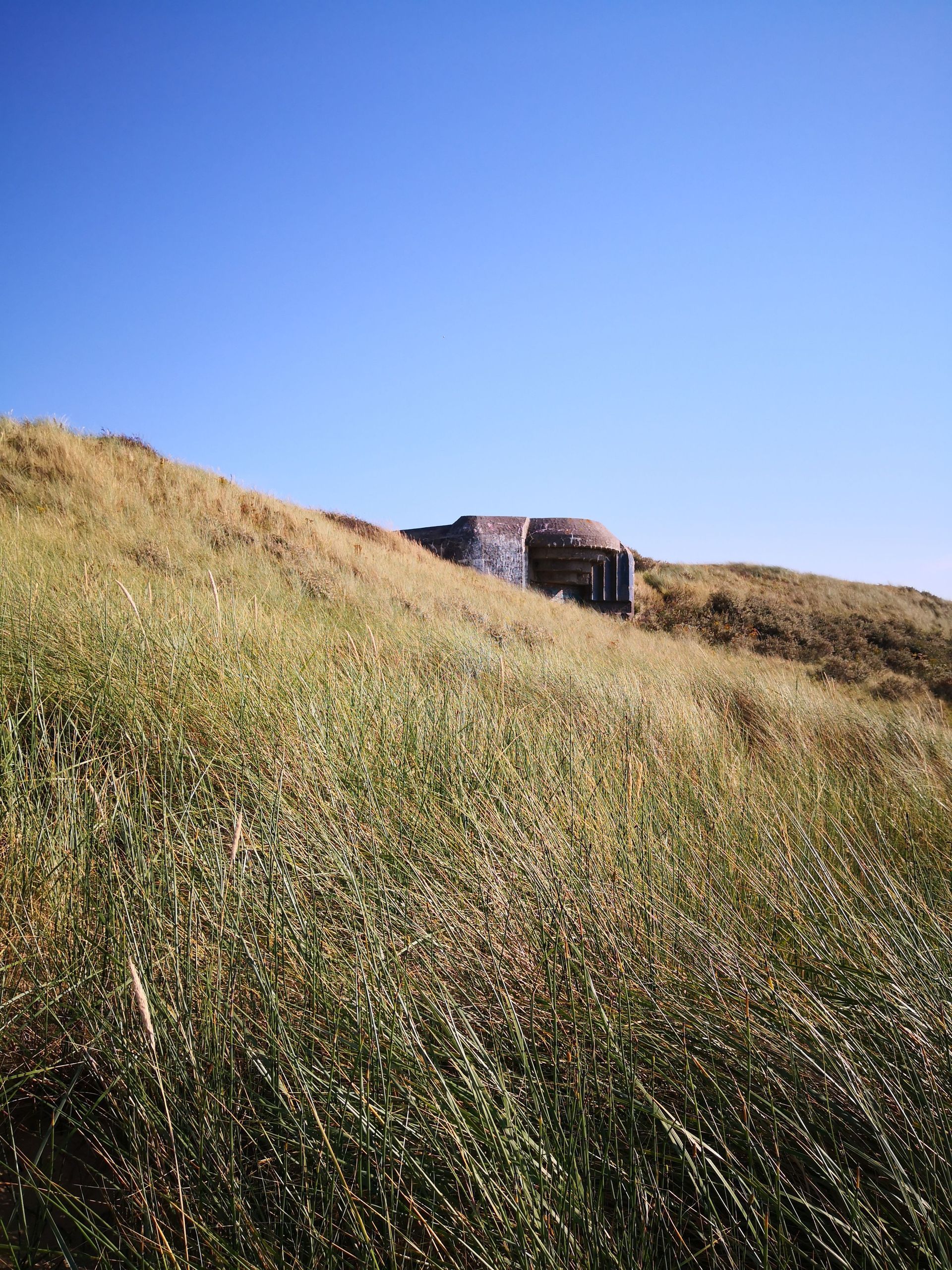
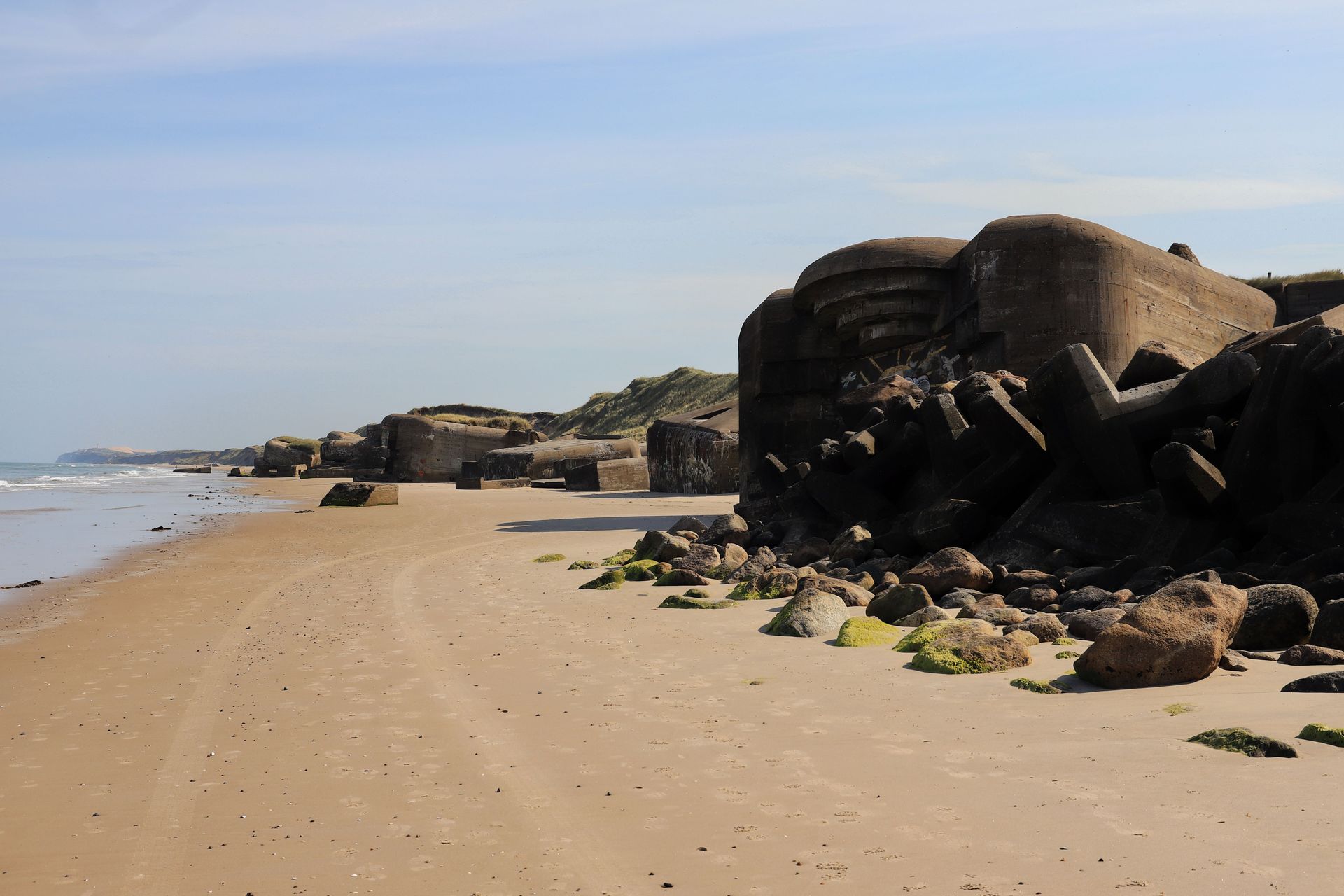
There are about four hundred bunkers in the dunes around Zandvoort. Most cannot be seen: they lie beneath the sand, have been bricked up or have partly collapsed. Some remain open in the landscape, complete with names, and you can look them up yourself.
Where you start depends on how you are travelling. The largest collection is in the Amsterdamse Waterleidingduinen, where cycling is not permitted. In Nationaal Park Zuid-Kennemerland, north of Zandvoort, it is allowed. That difference determines your whole day.
Table of contents:
- How many bunkers are there near Zandvoort?
- Why these dunes are full of concrete
- The Waterleidingduinen: the largest collection
- Please note: cycling is not permitted in the Waterleidingduinen
- Zuid-Kennemerland: here you can cycle past the remains
- The bunker on the Kopje van Bloemendaal
- How to get there from Zandvoort
- Tickets, opening hours and costs
- Which bike should you choose for this?
- What should you bring and what should you keep in mind?
- Search on your own or join a guided tour?
- Frequently asked questions
How many bunkers are there near Zandvoort?
About four hundred, with by far the most located in the Amsterdamse Waterleidingduinen. That figure is given by Visit Zandvoort, by Waternet itself and by Bezoek Atlantikwall, so you can assume it is accurate.
That does not mean you can see four hundred of them. After the war, many were demolished or bricked up, while those that remained were gradually buried beneath dune sand or ended up underwater. In practice, what you see are concrete roofs protruding just above a dune slope, a sealed entrance in a sandy bank, or a block lying there as if someone had simply dropped it.
A few are clearly recognisable and have even been given names. The Tonneblink is a former gun emplacement that now serves as a winter roost for bats. You can recognise the Keukenbunker by the three chimneys on its roof, as it was where meals were cooked for the troops. The rest simply have numbers: bunkers 34, 38, 55, 65, 66, 70, 71 and 75 are all on the official route.
Event venues
Why these dunes are full of concrete
The bunkers formed part of the Atlantikwall, a defensive line roughly five thousand kilometres long that ran from northern Norway to the Spanish border. On 14 December 1941, Hitler ordered its construction. The Netherlands lay in the middle section and was considered vulnerable to a landing from England, so construction along the North Sea coast accelerated from 1942 onwards.
For Zandvoort, the consequences were severe. In May 1942, the beach was declared a prohibited area, and shortly afterwards most of the population was ordered to evacuate. Around seven hundred homes and hotels were demolished to create a clear field of fire. In June 1943, the entire coastal area became Sperrgebiet: off limits, including to Dutch people.
The post-war figures show how thorough the destruction was. Of the 3,135 homes in Zandvoort, 683 were undamaged. In neighbouring Velsen, four thousand houses were lost, almost a third of the entire housing stock. Thousands of wooden poles, often fitted with mines, stood on the beach, and there were dozens of kilometres of barbed wire.
Around the golf courses of the Kennemer Golf & Country Club alone, around 130 bunkers were built to house soldiers. The Wehrmacht took over the clubhouse as its headquarters. Bezoek Atlantikwall also reports that rubble from the demolished houses was later used as the foundation for the circuit, and that V1 rocket launch sites stood in the dune area.
That story makes a walk past a few concrete blocks suddenly much less abstract. You are not walking through a randomly untidy patch of nature, but through what was once a military zone that the residents of your holiday town were not allowed to enter.
The Waterleidingduinen: the largest collection
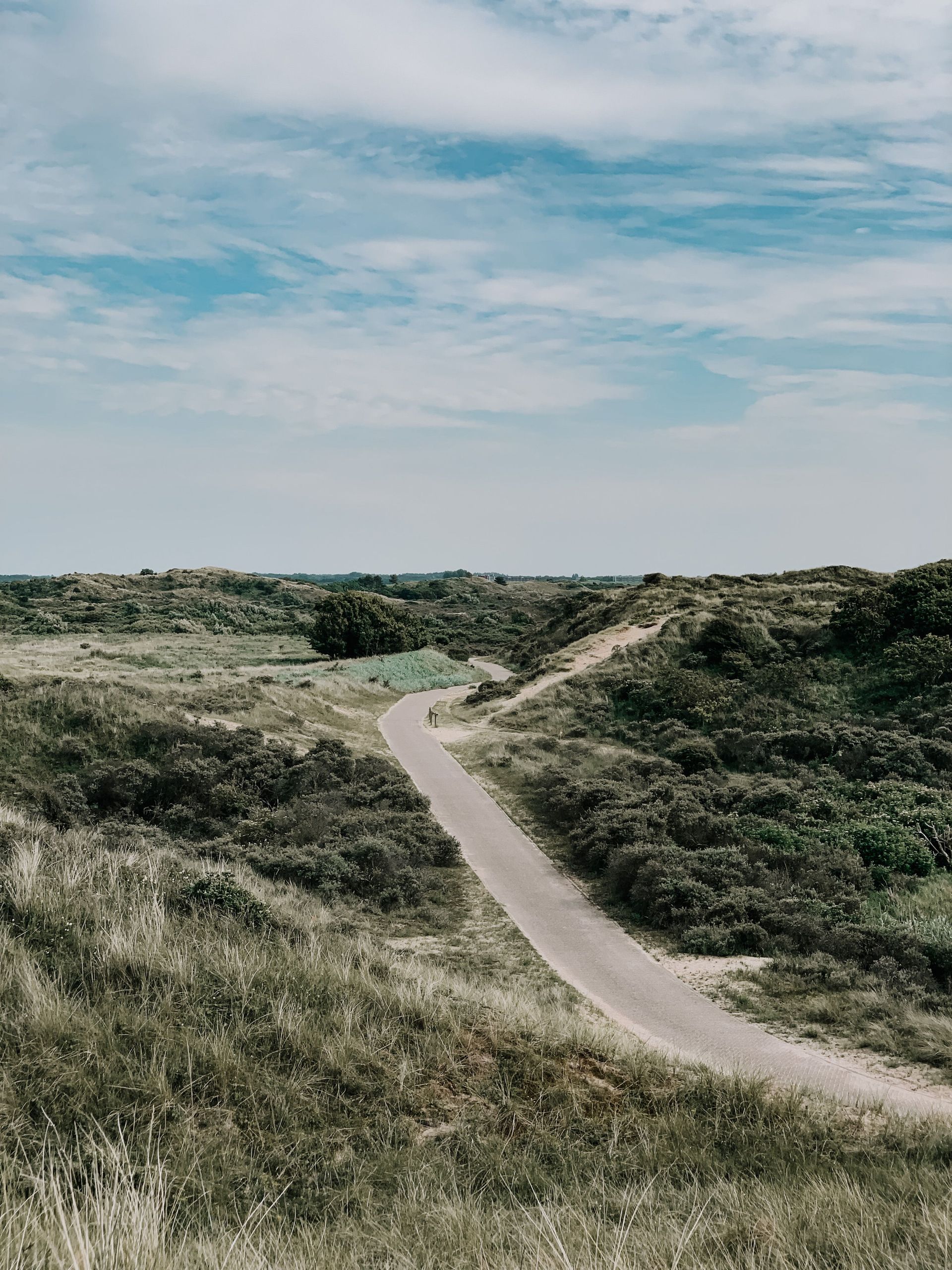
Waternet has marked out a bunker route through the Amsterdamse Waterleidingduinen. It is five kilometres long, takes about two hours, and starts at the entrance on the Zandvoortselaan. The route booklet costs one euro and is available at the visitor centre.
Along the way you pass the bunkers mentioned above, and the route also takes in the area’s finest dune tops. At thirty-six metres, the Rozenberg is the highest. The Appelenberg reaches thirty-five metres and is nicknamed Col du Cousin, while the Ezelenberg rises to twenty-seven metres. Water intake well six is also on the route, because the area is still in use for Amsterdam’s drinking-water supply.
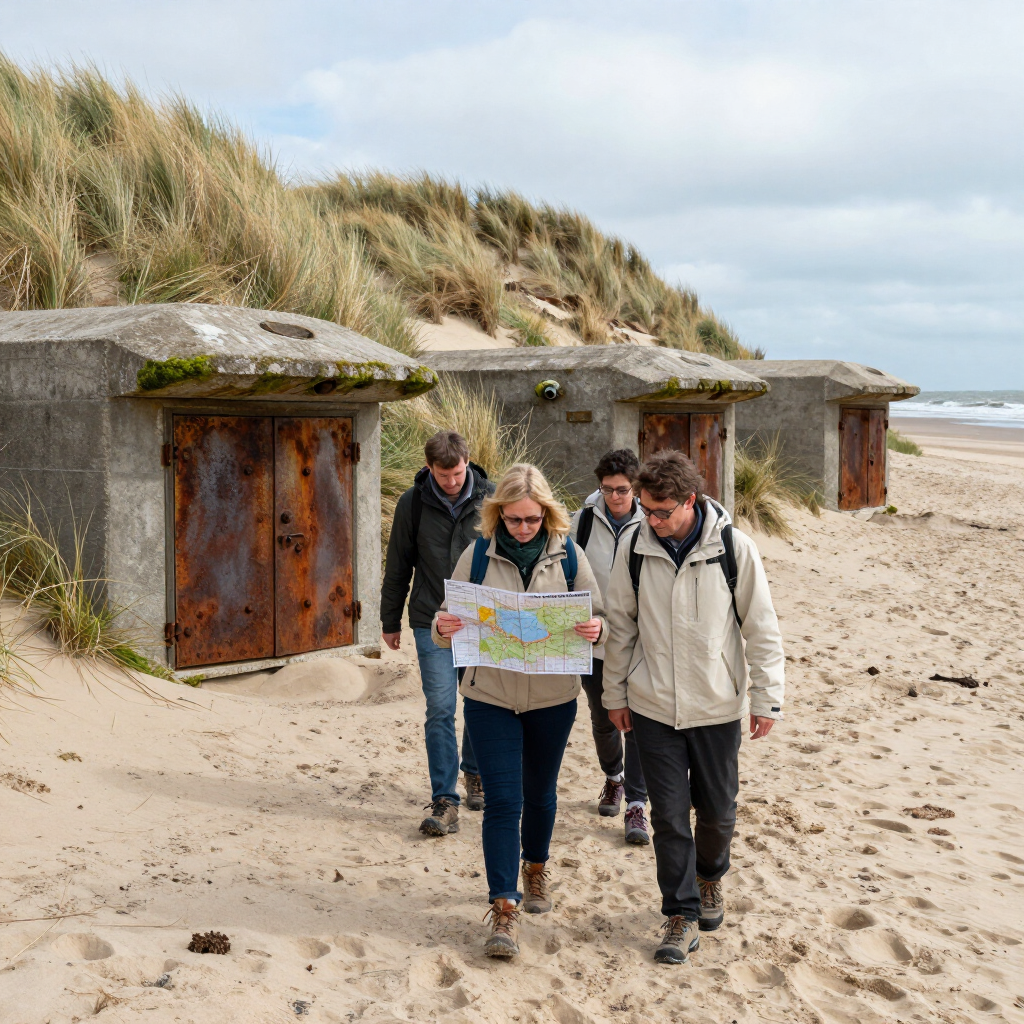
Expect to have to search. Some bunkers are so overgrown that you walk past them twice before spotting them, and that is exactly what makes it fun. Bring the booklet, because without the directions you will miss half of them.
You can look up the official bunker route through the Waterleidingduinen in advance to see exactly where it takes you.
Event venues
Please note: cycling is not permitted in the Waterleidingduinen
This is where most visitors get stuck. The Amsterdamse Waterleidingduinen are accessible on foot only. There are no cycle paths through the area, and this is not a matter of enforcement but of policy: it is a water-extraction area and a nature reserve, and cyclists do not fit in there.
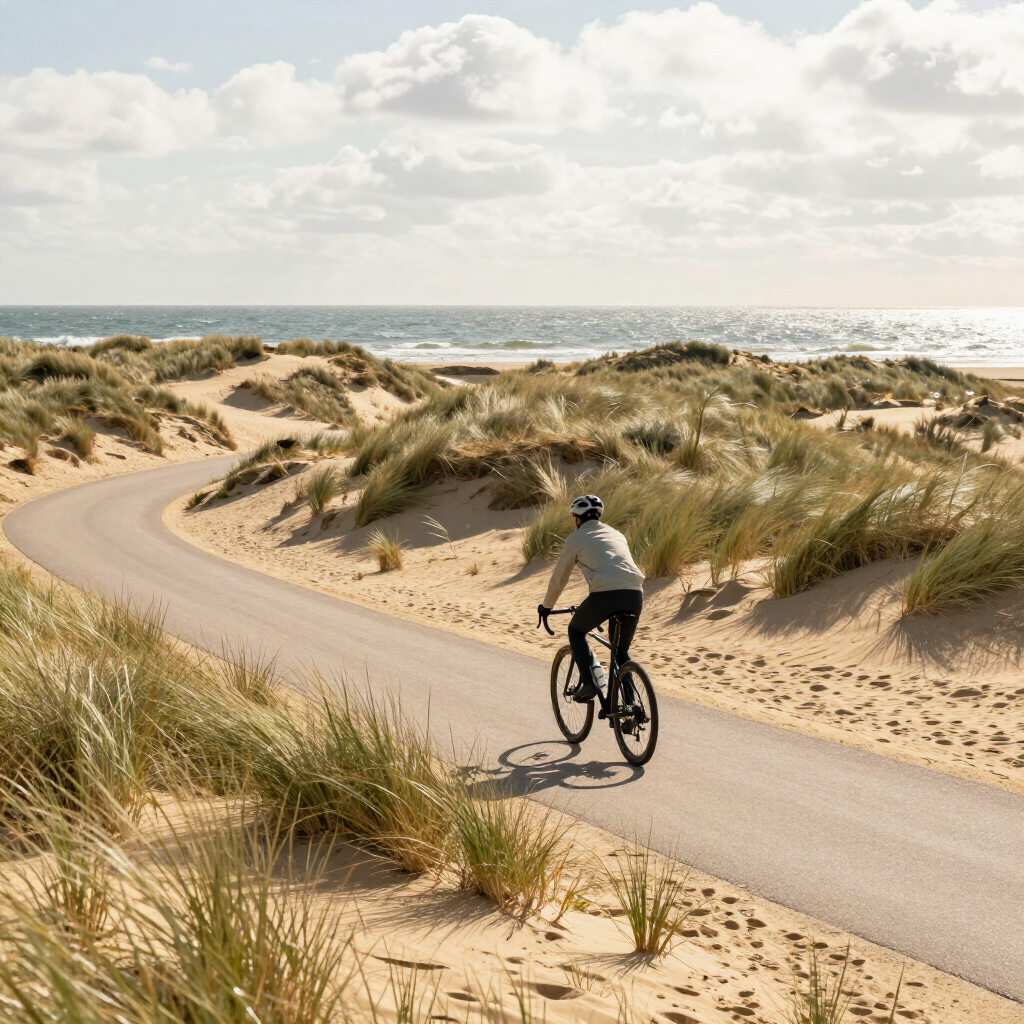
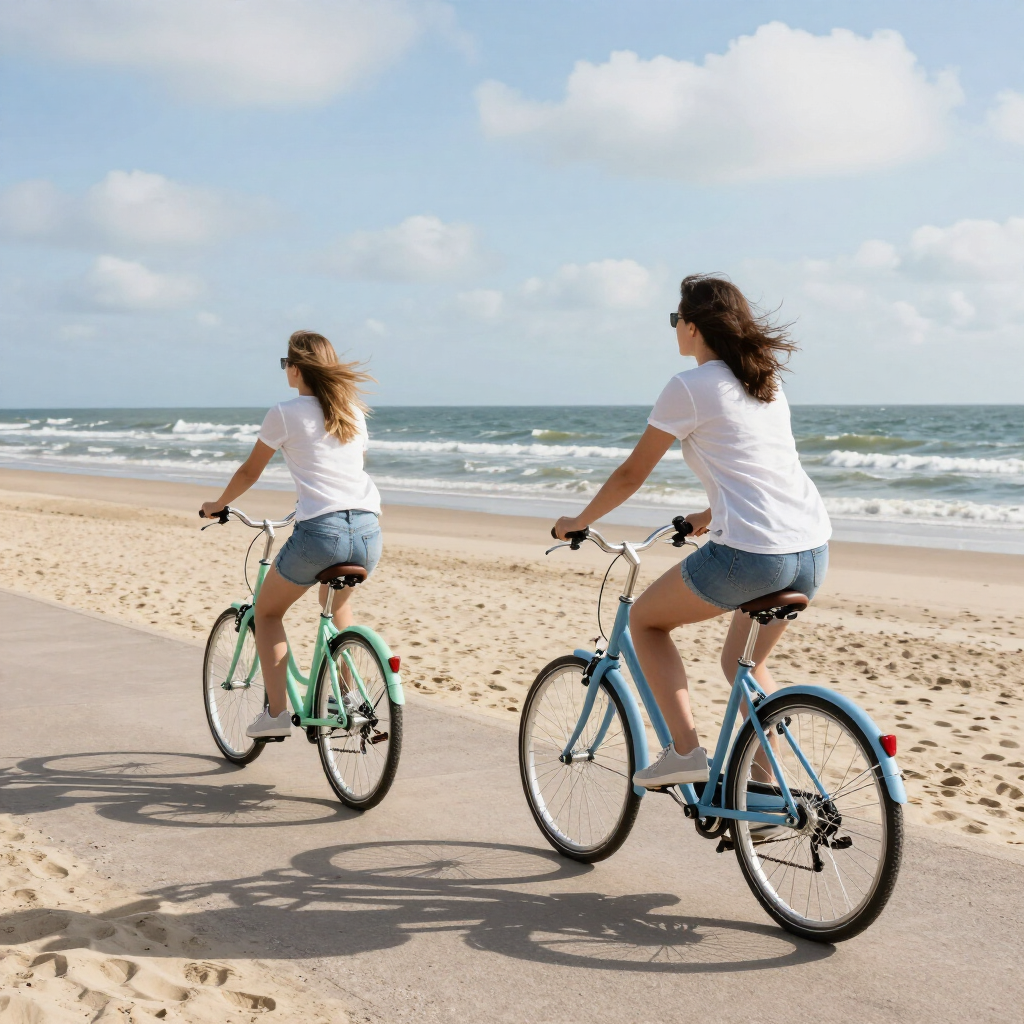
That does not have to ruin your plan. Cycle from Zandvoort to the entrance, leave your bike in the rack at Panneland on the Zandvoortselaan, and walk the route. The Oase entrance near Vogelenzang works the same way. That way you get the best of both worlds: you reach the edge of the dunes without a car or parking hassle, and you walk the section that really matters.
We explain in more detail what is and is not allowed in this area in the section about cycling in the Amsterdamse Waterleidingduinen from Zandvoort, including the routes you can ride around the area.
Zuid-Kennemerland: here you can cycle past the remains
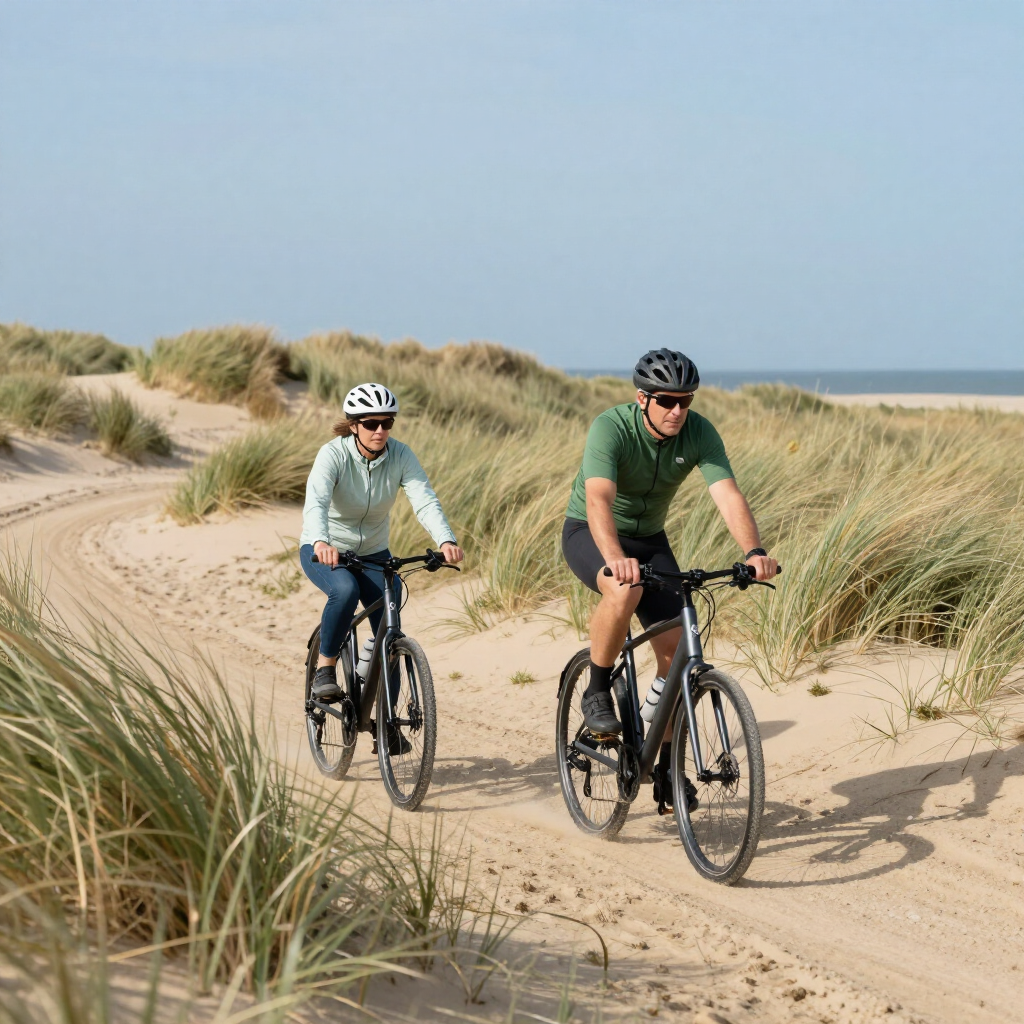
Nationaal Park Zuid-Kennemerland lies north of Zandvoort, and the story is different there. Proper cycle paths run through this park, and it too contains remains of the Atlantikwall.
The park itself names a handful of structures. In the Kraansvlak and Midden-Herenduin there are two Walzkorpersperren, rolling block barriers designed to close a road to vehicles. Midden-Herenduin also contains an anti-tank ditch. In addition, there is an anti-tank wall with an accompanying tobruk, a small circular fighting position for one or two men, and a fire-control bunker in the Heerenduin. There used to be a training ground at Groot Olmen.
These structures are spread out and not all lie right beside a cycle path, so you will need to combine the ride with some walking. But the major difference from the Waterleidingduinen is that here you can cycle through the area instead of around it. For anyone who does not fancy two hours of walking, this is the more comfortable option.
The routes from Zandvoort into this park are described in the section about cycling through Nationaal Park Zuid-Kennemerland.
Event venues
The bunker on the Kopje van Bloemendaal
There is one concrete remnant you can visit with virtually no detour: the bunker on the Kopje van Bloemendaal. The Kopje is the well-known viewpoint above Bloemendaal aan Zee, and it is one of the few places where wartime history and a good view share the same hill.
For anyone who wants to keep bunker day short, this is the easiest option: cycle there, climb to the top, look out over the dunes towards Haarlem and the North Sea, and be back in Zandvoort within an hour. The section about the Kopje van Bloemendaal explains how to get there and what kind of climb to expect.
How to get there from Zandvoort
To reach the Waterleidingduinen, take the Zandvoortselaan from the village towards Bentveld. Simply continue straight along this road; the Panneland entrance is on the right and clearly signposted. There is a bicycle rack at the entrance. If you head the other way, you can reach the Oase entrance via Vogelenzang, which is a longer but quieter ride.
Head north to Zuid-Kennemerland. From the boulevard, take the route towards Bloemendaal aan Zee, then turn into the dunes via the Zeeweg. From there you can go in any direction: towards Overveen, towards the Kopje, or farther into the park towards Santpoort.
Both rides are short enough to fill a morning or afternoon rather than an entire day. If you are unsure which way to go, choose Zuid-Kennemerland if cycling is your main aim, and the Waterleidingduinen if you mainly want to see bunkers.
Event venues
Tickets, opening hours and costs
You need an admission ticket for the Amsterdamse Waterleidingduinen. According to Visit Zandvoort, it costs 1.50 euros for everyone aged eighteen and over, and a parking ticket costs two euros per day if you come by car. The area is open from sunrise to sunset. Prices can change, so check them on the Waterleidingduinen website before you leave.
If you come by bike, you avoid the parking charge. That saves not only money but, above all, hassle, because the parking areas at the dune entrances fill up quickly on sunny days.
Nationaal Park Zuid-Kennemerland does not charge an admission fee for the park as a whole. Certain areas and organised excursions do have their own rules, so check in advance what is happening that day.
Which bike should you choose for this?
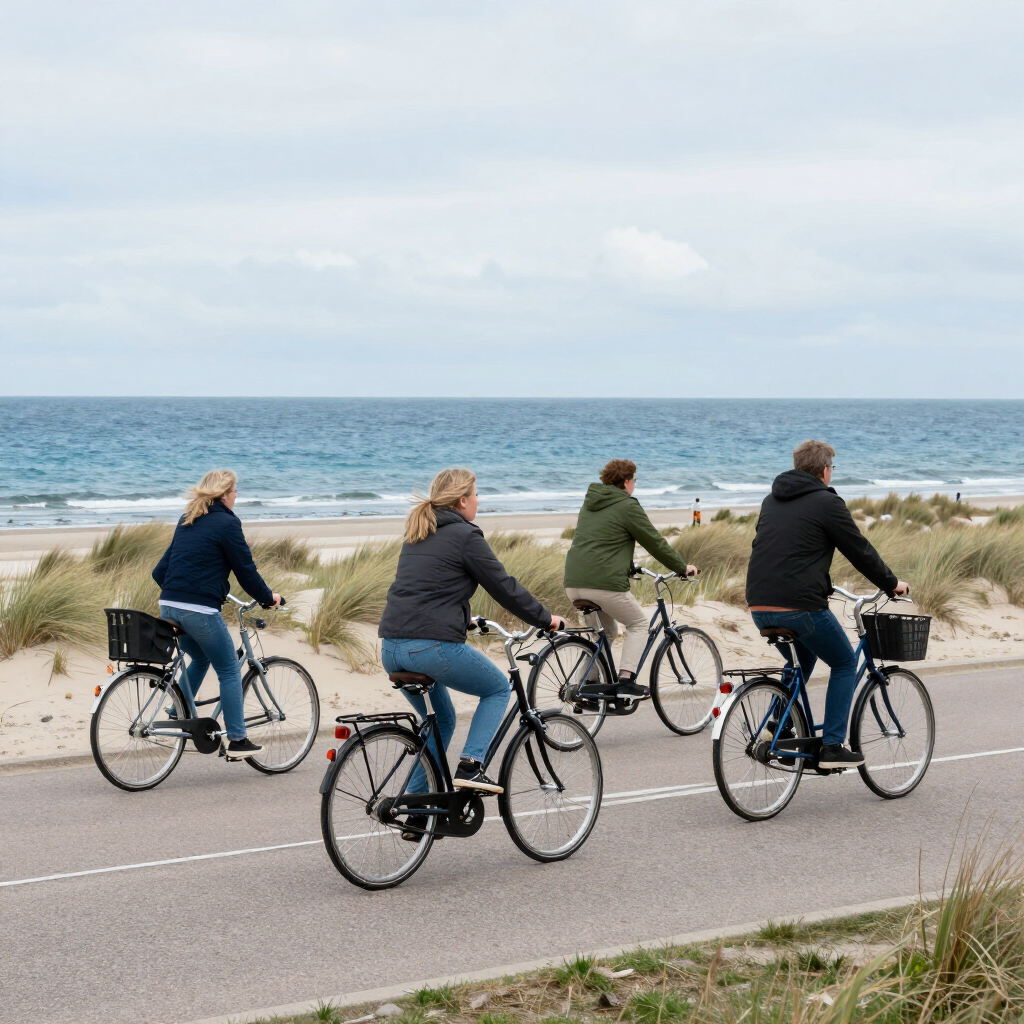
A regular city bike is perfectly adequate for the ride to the Zandvoortselaan. It is flat and paved, and you only need to cycle as far as the entrance.
Zuid-Kennemerland is a different proposition. The Zeeweg climbs, there is almost always wind in the dunes, and the paths go up and down. An electric bike makes a big difference, especially if you are riding in a group where not everyone pedals at the same pace. On the loose sandy paths at the edges, a fatbike with wide tyres is more comfortable than one with narrow tyres.
If you are not sure which one you need, take a look at our bike hire in Zandvoort or drop in. We can help you work out where you want to go and which bike is best suited to it.

Event venues
What should you bring and what should you keep in mind?
Bring the route booklet when you walk the bunker route, because without directions you will not find most of the bunkers. Also bring water, as there are no shops in the Waterleidingduinen, and shoes that can handle sand.
Do not climb into or onto the bunkers. Some are unstable, and several bunkers are used by bats for hibernation. Bats react badly to light, noise and warmth, and a disturbed hibernation uses energy they cannot replenish. So stay outside, even if an entrance appears to be open.
Dogs are not allowed in the Amsterdamse Waterleidingduinen. Different rules apply in different parts of Zuid-Kennemerland, so check before setting off with your dog.
Autumn and winter are honestly the best seasons for this. The vegetation is lower, so you see more concrete than in summer, and it is considerably quieter.
Search on your own or join a guided tour?
You can go independently all year round, paying only for admission and the route booklet. You set your own pace and can shorten the route if conditions are against you.
Guided walks are also available. According to Visit Zandvoort, they run every Wednesday from March through June. A private guided walk costs ten euros per person, excluding admission to the dunes. With a guide, you get the full story and see bunkers you would probably have overlooked on your own.
If you are going with children, searching on your own usually works better than a guided tour. It is easy to turn looking for bunkers into a treasure hunt, and you can stop whenever you like.
Frequently asked questions
Can you view the bunkers near Zandvoort from the inside?
Usually not. Most bunkers were bricked up or demolished after the war, and those that remain open often serve as bat roosts and are closed off with a grille. So you view them from the outside. Organised excursions sometimes make an exception.
How many bunkers are there in the Amsterdamse Waterleidingduinen?
About four hundred. A large number are not visible because they lie beneath the sand or underwater. The five-kilometre marked bunker route takes you past the ones you can actually find.
Can you cycle to the bunkers?
As far as the dune entrance, yes; after that, no. Cycling is not permitted in the Amsterdamse Waterleidingduinen, so you leave your bike at the entrance and continue on foot. In Nationaal Park Zuid-Kennemerland, you can cycle into the area and pass remains of the Atlantikwall along the way.
How much is an admission ticket for the Waterleidingduinen?
Visit Zandvoort lists the price as 1.50 euros per person from the age of eighteen. Children enter free. If you come by car, there is an additional two euros per day for parking. Check the current rates before you set off.
Is the bunker route suitable for children?
Yes, five kilometres over dune paths is manageable for most children, and searching for half-hidden bunkers feels like a treasure hunt. Bear in mind that the path goes up and down and that a pushchair cannot make it through.
When is the best time to go?
In autumn and winter. The vegetation is low then, so more of the concrete is visible, and the dunes are quieter. In summer, go early in the day, when it is cooler and the paths are less crowded.