



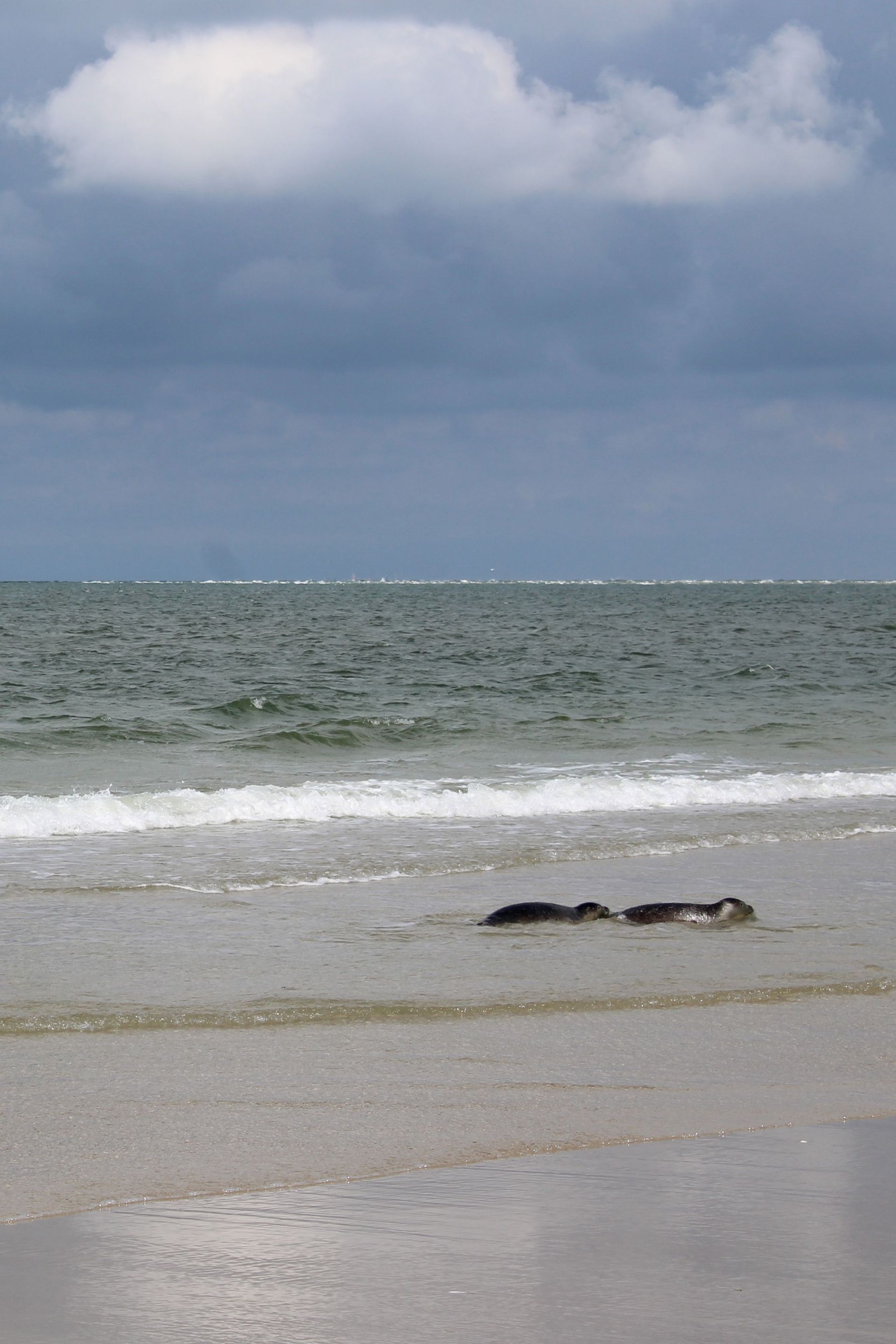
You’re walking along the beach at Zandvoort-Zuid and spot something dark in the distance. At first, you think it’s a piece of driftwood. Then it lifts its head. Seals also come ashore on this stretch of coast. Usually, it’s a lone animal resting on the sand for a while.
Is it sick? Can you get closer? Should you call someone? And where are you most likely to see one? You’ll find the answers below. You’ll also find out how to cycle to Noordvoort, the quiet beach where seals are left undisturbed.
Contents:
- Are there really seals on Zandvoort beach?
- Common or grey seal: how to tell the difference
- When you’re most likely to see one
- Noordvoort: the quiet beach between Zandvoort and Noordwijk
- How to cycle to Noordvoort
- How far away to stay, and why
- Does the seal need help?
- Who to call and what happens next
- On the beach with your dog
- Seal watching with children
- What to bring
- Frequently asked questions
Are there really seals on Zandvoort beach?
Yes. Most seals in the Netherlands live in the Wadden Sea and the Zeeland delta, but they swim long distances and come ashore all along the Dutch coast. This happens regularly near Zandvoort, too. Local media have reported seals on the beach in southern Zandvoort and towards Bloemendaal in recent years. On one occasion, a seal even came ashore on the boulevard by the Palace Hotel. A seal warden and the lifeguard brigade guided it back to the beach.
A seal lying on the sand is usually just resting. According to seal warden Bart van der Boom, who is often called out here, nine times out of ten there’s nothing wrong. He told NH Nieuws. Seals need to come ashore from time to time. In the Wadden Sea, they rest on sandbanks that emerge at low tide. Here, the beach is their only option.
That’s the problem. A beach full of walkers, dogs and cyclists isn’t a quiet place for a seal. That’s why most animals lie on quieter stretches, such as south of Zandvoort toward Noordwijk.

Event venues
Common or grey seal: how to tell the difference
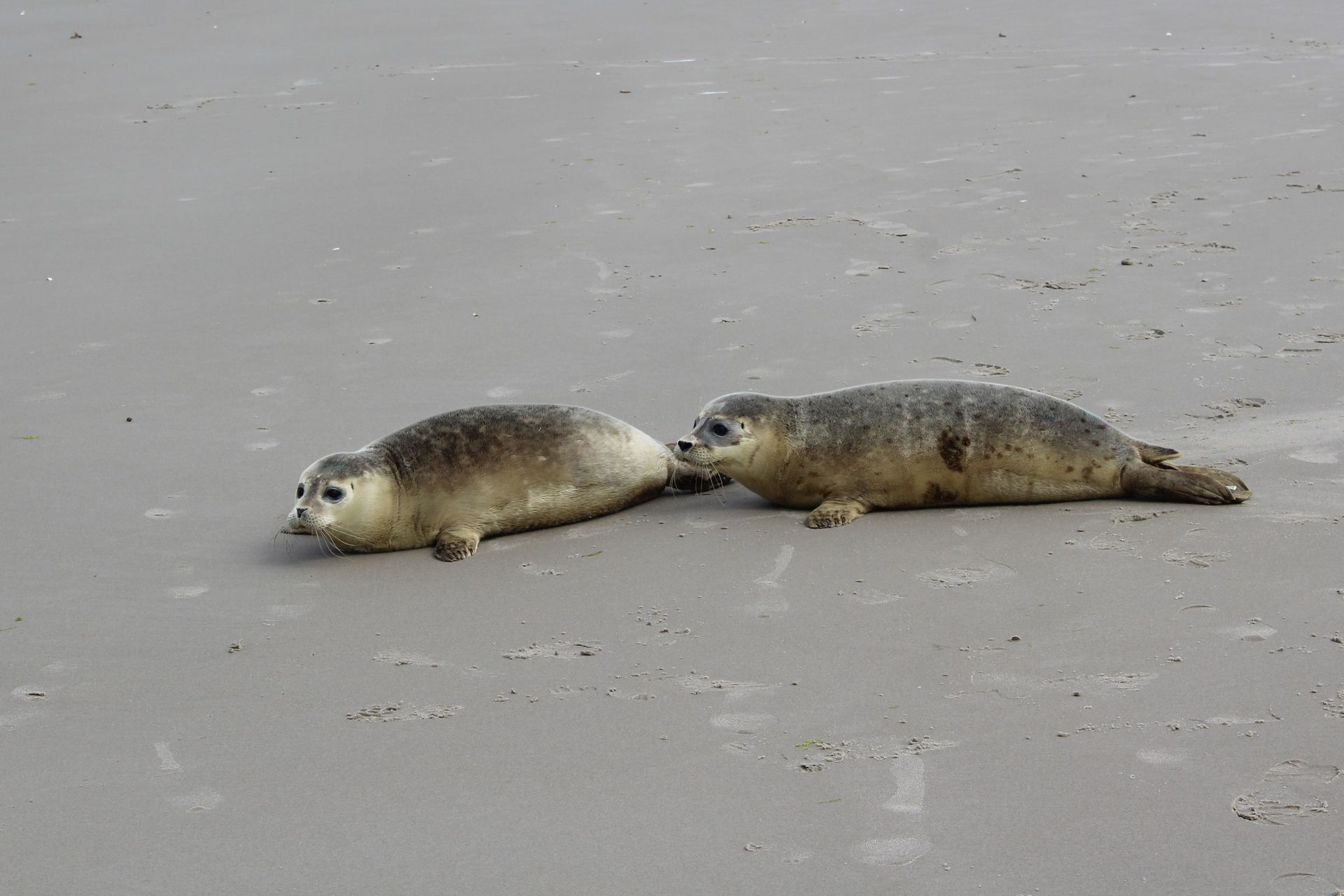
Two species are found in the Netherlands. You may encounter both near Zandvoort. The easiest way to tell them apart is by their heads.
- Harbor seal: a round, blunt head that looks a little like a dog’s. Spotted coat in gray or brown. Adults weigh 50 to 150 kilos. The nostrils form a V-shape.
- Grey seal: a longer, cone-shaped head with a straight snout. That’s why it’s also known as the grey seal (or Atlantic grey seal). A male can grow to over three metres long and weigh up to 350 kilos, more than twice as much as the heaviest common seal. Its nostrils are vertical, like two lines side by side.
On the beach, you can also tell by the seal’s posture. A common seal resting on the beach often raises its head and hind flippers at the same time, arching its body like a banana. Seal wardens call this the “banana pose”; it means the animal feels at ease.
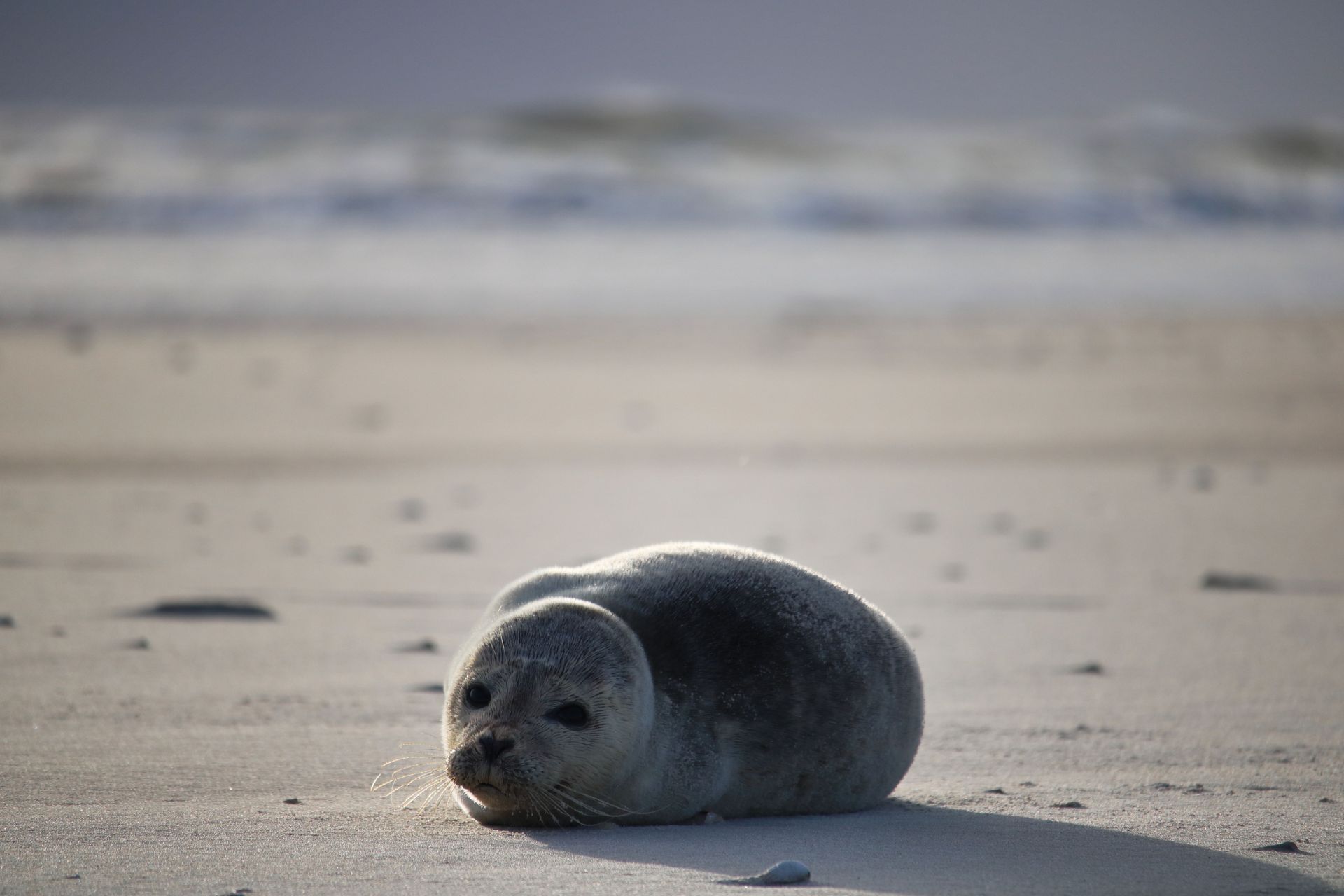
If you spot a small animal with white, fluffy fur in winter, you’re probably looking at a young grey seal. Its white baby fur keeps it warm but isn’t waterproof. That means the pup can’t swim well during its first few weeks. It really needs a quiet stretch of beach.
When you’re most likely to see one
You can see seals all year round, but there are two periods when more come ashore along the coast.
May and June. This is when common seals give birth, mostly in the Wadden Sea. After spending three to four weeks with their mother, the pups have to fend for themselves. Young seals sometimes swim long distances at this stage. They come ashore to rest on a quiet beach.
Late November to January. This is grey seal pupping season. According to Natuurmonumenten, most pups are now born in late November and early December, earlier than they were thirty years ago. Once they’re weaned, they leave the sandbanks where they were born. Ecomare says you’re relatively likely to spot a young grey seal while walking on the beach at this time of year.
The time of day matters, too. Hollandse Duinen National Park recommends going early in the morning or around dusk, when the beach is quietest. If you visit in winter, you’ll often have kilometres of beach to yourself even during the day.
There’s no guarantee. Seals don’t have a fixed resting place like a sandbank, and what you’ll find on the beach that day depends on the sea. Think of it as a bonus on your beach walk. There’s plenty to discover out of season, too. For example, read about what you can find on the beach after a storm.
Event venues
Noordvoort: the quiet beach between Zandvoort and Noordwijk
The best place to see a seal near Zandvoort is Noordvoort Beach Reserve. This is a three-kilometre stretch of beach between beach markers 70 and 73, right on the border between the provinces of North Holland and South Holland. It’s the Netherlands’ first beach reserve and opened in 2019.
What makes Noordvoort special is that you walk over the dunes rather than along the beach. At beach markers 70 and 73, you’ll see rows of tall wooden posts. There, you leave the beach and continue along the outer row of dunes, known as the dune ridge. This is the only place in the Netherlands where you can do this. It keeps the beach itself quiet for birds and seals coming ashore.
There are three lookout points along the path over the dunes. Coming from Zandvoort, you’ll reach Vizier first, about 400 metres past the beach markers. A kilometre further on is Theaterzit, on the provincial border. Another 600 metres on is Juttersplek. From these points, you can look down over the beach and see the animals without disturbing them.
A few rules that apply in Noordvoort:
- Dogs must be kept on a lead on the beach and in the dunes.
- Keep your distance from birds and seals.
- Mountain biking is not allowed on this stretch of beach.
- Avoid sitting at the foot of the dunes or on the dune ridge.
How to cycle to Noordvoort
Noordvoort is a long walk away. From the boulevard near the town centre (beach marker 66, close to the station), it’s four kilometres along the beach to marker 70. From the southern end of the boulevard, it’s three kilometres. And you’ll have to walk all the way back, too.
It’s an easy ride by bike. There are two ways to get there.
Take the cycle path through the dunes. There are three bike racks along the dunes cycle path between Zandvoort and Noordwijk, each with an information board. From a rack, it’s no more than a 250-metre walk along a connecting path to one of the lookout points. To see a little more, walk a loop past two lookout points and back to your bike via the cycle path. That’s about 2.5 kilometres.
Along the beach. Outside the bathing season, you can also ride a fat bike south along the beach. The reserve starts at the row of posts near beach marker 70. Mountain biking is not allowed on that stretch of beach, so turn back. If you want to head up onto the coastal dunes and take in the views from the lookouts, choose the cycle path route. Read our article on cycling on Zandvoort beach to find out how and when you can ride on the sand.
Which bike to choose depends on the wind. It’s almost always windy by the sea. If you have a tailwind on the way there, you’ll have a headwind on the way back. On an e-bike, you’ll hardly notice it. Don’t have a bike? At our bike rental shop on Haltestraat, you can choose from city bikes, e-bikes and fat bikes. When you pick it up, we’ll tell you which route is best that day.


Event venues
How far away to stay, and why
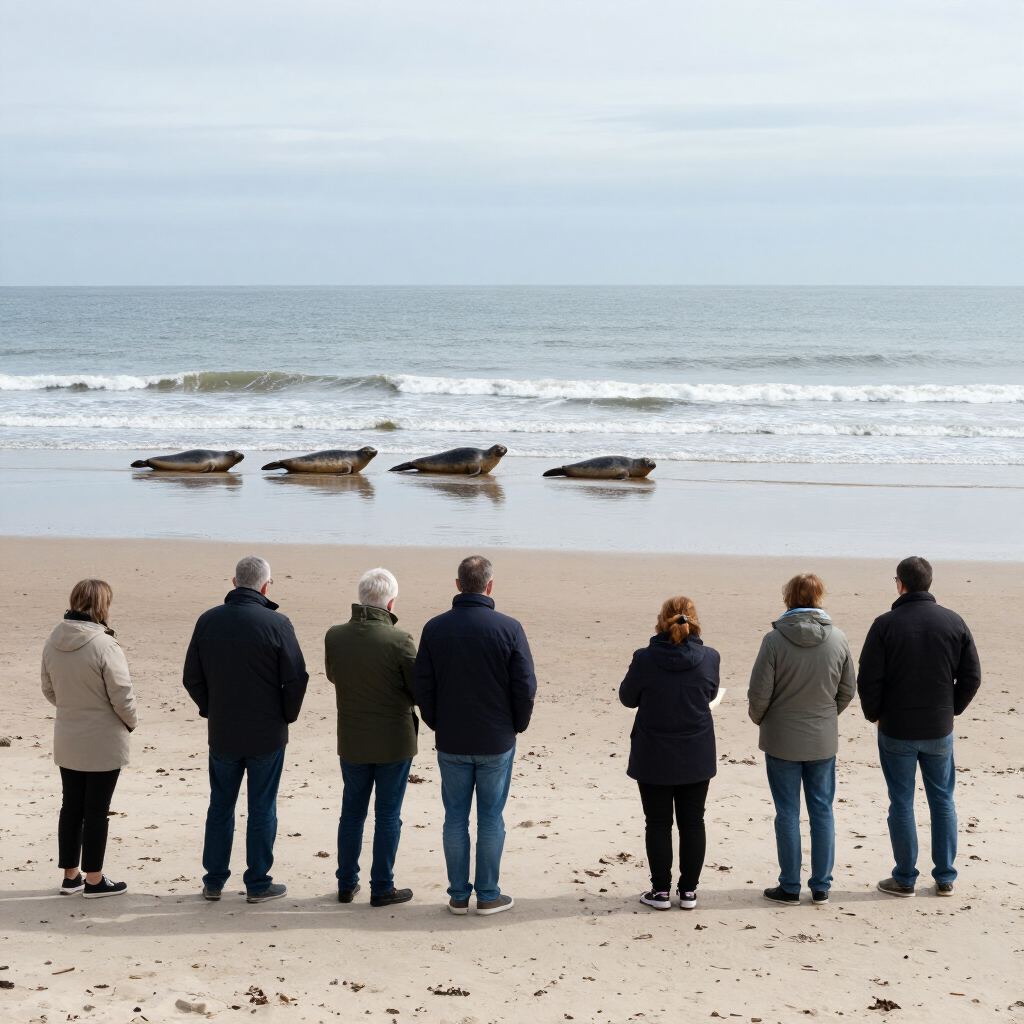
The rule of thumb is to keep at least 30 meters away. Seal rescue center A Seal compares that to two city buses parked end to end. For a pup, A Seal recommends keeping as much as 50 meters away.
A wild animal will notice you sooner than you think. If a seal keeps looking your way or moves toward the water, you’ve already disturbed it. That uses up energy it needs to regain its strength. This is even more important when it’s a pup. If its mother is nearby, she won’t dare come back while people or dogs are standing near her pup.
Keeping your distance is wise for your own safety, too. Seals are predators with sharp teeth. An animal that feels threatened may bite. Seals can also carry viruses. So never pet a seal, feed it or push it back into the sea.
You can take a photo, but zoom in from a distance. Binoculars are even better. You’ll see much more than you would with a phone, and you won’t need to get any closer.
Does the seal need help?
Usually not. If it’s lying alone and moving very little, it’s often just resting. A pup lying alone isn’t necessarily abandoned either. Its mother may be out at sea looking for food.
A Seal lists a few signs that something may be wrong:
- A pup lies alone for a long time and calls out frequently.
- The animal looks thin or weak.
- You see wounds, or the animal is tangled in a net or rope.
- The seal is in an unsafe location, for example among people, near dogs or on the promenade.
Not sure? Don’t jump to conclusions or move closer for a better look. It’s better to call. A seal ranger will assess whether the animal needs help. Leave that decision to them. In February 2024, a walker found a young gray seal between Zandvoort and Bloemendaal, dragging a net several meters long behind it. After it was reported, the animal was helped and later released near Noordvoort. Without the report, it probably wouldn’t have ended well.

Event venues
Who to call and what happens next
If you see a seal in distress, call 144, the national number for Red een Dier. After you report it, an experienced seal ranger will assess the situation. On this stretch of coast, the seal rangers from A Seal work alongside the Bloemendaal Lifeguard Brigade and Eerste Hulp Bij Zeezoogdieren (EHBZ) from Noordwijk.
When you call, give your location as precisely as possible. Tell us the number of the nearest beach marker. These markers run along the entire coast, and each one has its own number. Also describe what you can see: how large the animal is, whether it’s moving and whether it has any wounds.
Sometimes a seal ranger will call you back first to check the location. They’ll then come and take a look. If the animal is healthy and simply resting, they’ll leave it alone. Sometimes it gets a colored dot so the rangers can recognize it later. If it’s sick or injured, it will be taken to a rescue center. In the meantime, all you need to do is keep your distance and ask others to do the same.
You can find out what else to do on A Seal’s Found a seal? page.
On the beach with your dog
There are more dogs on the beach in autumn and winter. That’s because dogs in Zandvoort are allowed on the beach at any time of day from 1 October to 15 April. From 15 April to 1 October, they’re allowed only in the evening and early morning, from 7 pm to 9 am.
Dogs are one of the biggest sources of stress for seals. An off-leash dog charging at a seal can drive it into the sea, even when it needs to rest. Your dog is also at risk. According to A Seal, a seal bite can be dangerous for a dog.
If you spot something in the distance, put your dog on a lead straight away and walk well around the animal. Dogs must be kept on a lead throughout Noordvoort, both on the beach and in the dunes.


Event venues
Seal watching with children
Seeing a real seal in the wild is much more exciting for children than seeing one behind glass. It helps to explain a few things to them beforehand, though. Children love to run up to seals, and that’s exactly what you need to prevent.
- Agree in advance that you’ll look together and not get any closer.
- Let them look through binoculars. That way, they won’t need to get any closer to see.
- Let them look closely: can they spot a round head or a long one? Is the seal lying like a banana?
- Have them find the number of the nearest beach marker themselves. That way, they’ll know what to report if anything ever happens.
With young children, the cycle path is the easiest route. Park your bike and it’s only a few hundred metres’ walk to a lookout point. You can rent a child seat or cargo bike from us.
Fancy something warm afterwards? A number of beach pavilions in Zandvoort are open in winter, too. Find out which ones in our guide to beach bars that are open in winter.
What to bring
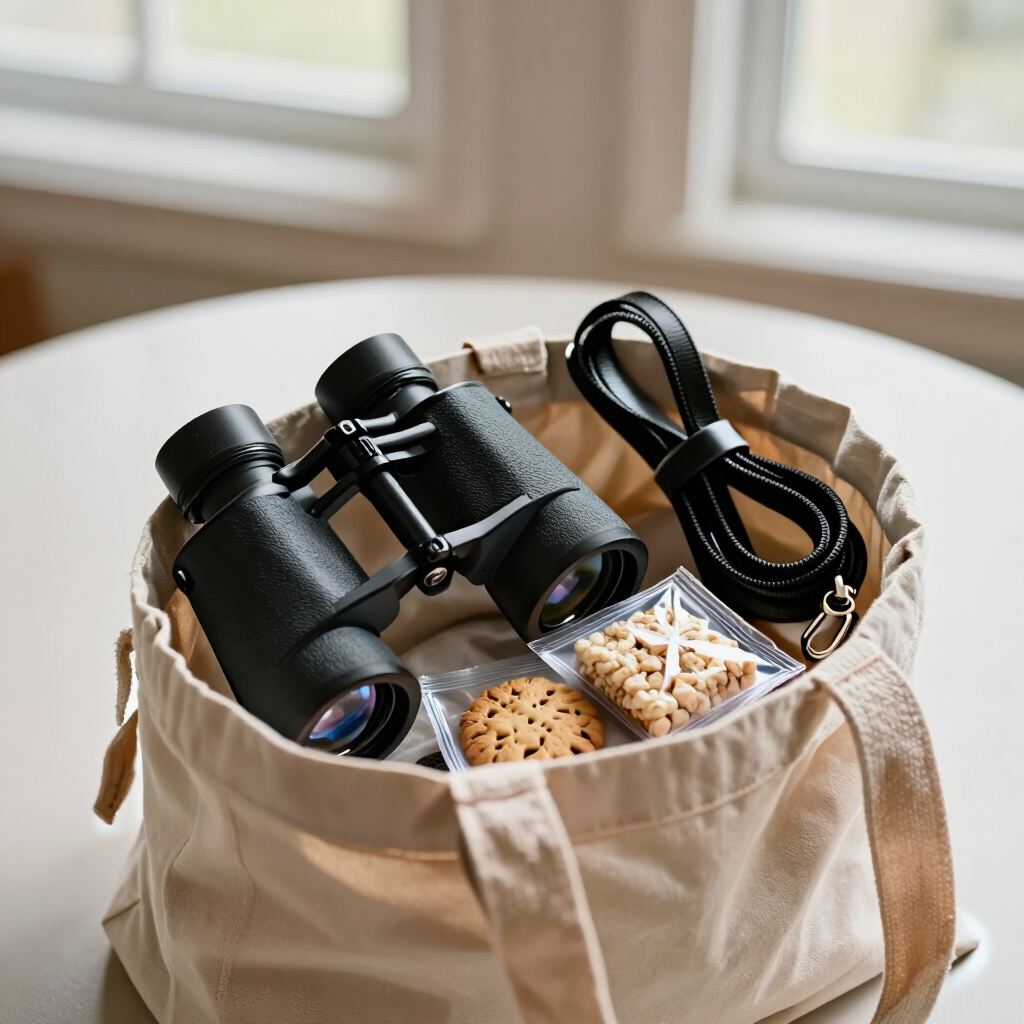
- A pair of binoculars. The most important thing to bring. With binoculars, you can even see the shape of the nostrils.
- A windproof jacket. It’s very windy on the coastal dunes.
- A fully charged phone. In case you need to call for help for a seal.
- A lead for your dog. Even if they’re usually allowed off the lead.
- Something to drink and a snack. There are deliberately no bins in Noordvoort, so take your rubbish home with you.
Frequently asked questions
What’s the best time to see seals near Zandvoort?
You’re most likely to see them in winter, from late November to January, when young gray seals swim along the coast. You can also spot them regularly in spring and summer, after harbor seal pupping season in May and June. Go early in the morning or around dusk, when the beach is quiet.
Where’s the best place to see seals near Zandvoort?
In Noordvoort Beach Reserve, between beach markers 70 and 73, south of Zandvoort. This stretch of beach is a sanctuary for seals and birds. You can look out over the beach from three lookout points on the dunes.
When are dogs allowed on Zandvoort beach?
In Zandvoort, dogs are allowed on the beach at any time from October 1 to April 15, and between 7 p.m. and 9 a.m. from April 15 to October 1. Dogs must always be kept on a leash in Noordvoort Beach Reserve. If you see a seal lying on the beach, leash your dog immediately, wherever you are.
What should you do if you see a seal on the beach?
Stay at least 30 metres away from the animal, or 50 metres if it’s a pup. Don’t touch it or push it back into the sea. If it’s sick, injured or entangled, call 144 and give the number of the nearest beach marker.
Are seals dangerous?
A seal is a wild predator with sharp teeth. If it feels threatened, it may bite. It may also carry a virus. It’s not dangerous as long as you keep your distance. Keep dogs and children well away.
Can you cycle to Noordvoort?
Yes. There are three bike racks along the cycle path through the dunes between Zandvoort and Noordwijk. From each rack, it’s no more than a 250-metre walk to a lookout point. Mountain biking is not allowed on the beach within the reserve itself.