



After a night of strong winds, Zandvoort beach looks different from the day before. The high-tide line has shifted, ribbons of seaweed lie far up on the dry sand, and all sorts of things are scattered among them: shells you never see in summer, pieces of wood, a cuttlebone, sometimes something you only figure out once you get home. Searching and collecting like this is called beachcombing, and it is one of the few things that is more enjoyable in November than in July.
Zandvoort is simply less well known for it than Texel or Zeeland. Unfairly so, because the North Sea washes up the same things here. You just need to know when to go and where to look. It is all set out below, including how to reach the quiet stretch of beach where nobody has walked yet.
Table of contents:
- What beachcombing actually is
- Why the Zandvoort coast is a great beachcombing spot
- When to go: tides, wind and storms
- The tide line: that’s where it is
- What you can find along this coast
- Shark teeth and other prehistoric finds
- What you may and may not take home
- Beachcombing with children
- How to reach the quieter stretch of beach
- What to bring
- Beachcombing for a cleaner beach
- Afterwards: warm up
- Frequently asked questions
What beachcombing actually is
Beachcombing means searching for and collecting things that have washed up on the beach. In the past, it was a matter of survival. Coastal residents and islanders searched for wood to burn and build with, and for cargo from ships that had not made it. A good find could keep a family warm through the winter.
These days, it’s a hobby. You no longer head onto the beach with a cart to haul timbers; you walk a few kilometres along the tide line, looking down. What you take home usually fits in a jacket pocket: shells, a crab shell, a smooth piece of driftwood, perhaps a shark tooth if you’re lucky. There’s also a modern version called beach cleaning, where you mainly pick up plastic that doesn’t belong on the beach. In Zandvoort, the two often overlap.
Most people who take beachcombing seriously bring a second bag for rubbish.
The best thing about it: you need nothing. No ticket, no reservation, no equipment. Just a beach that the sea has recently churned up.
Event venues
Why the Zandvoort coast is a great beachcombing spot
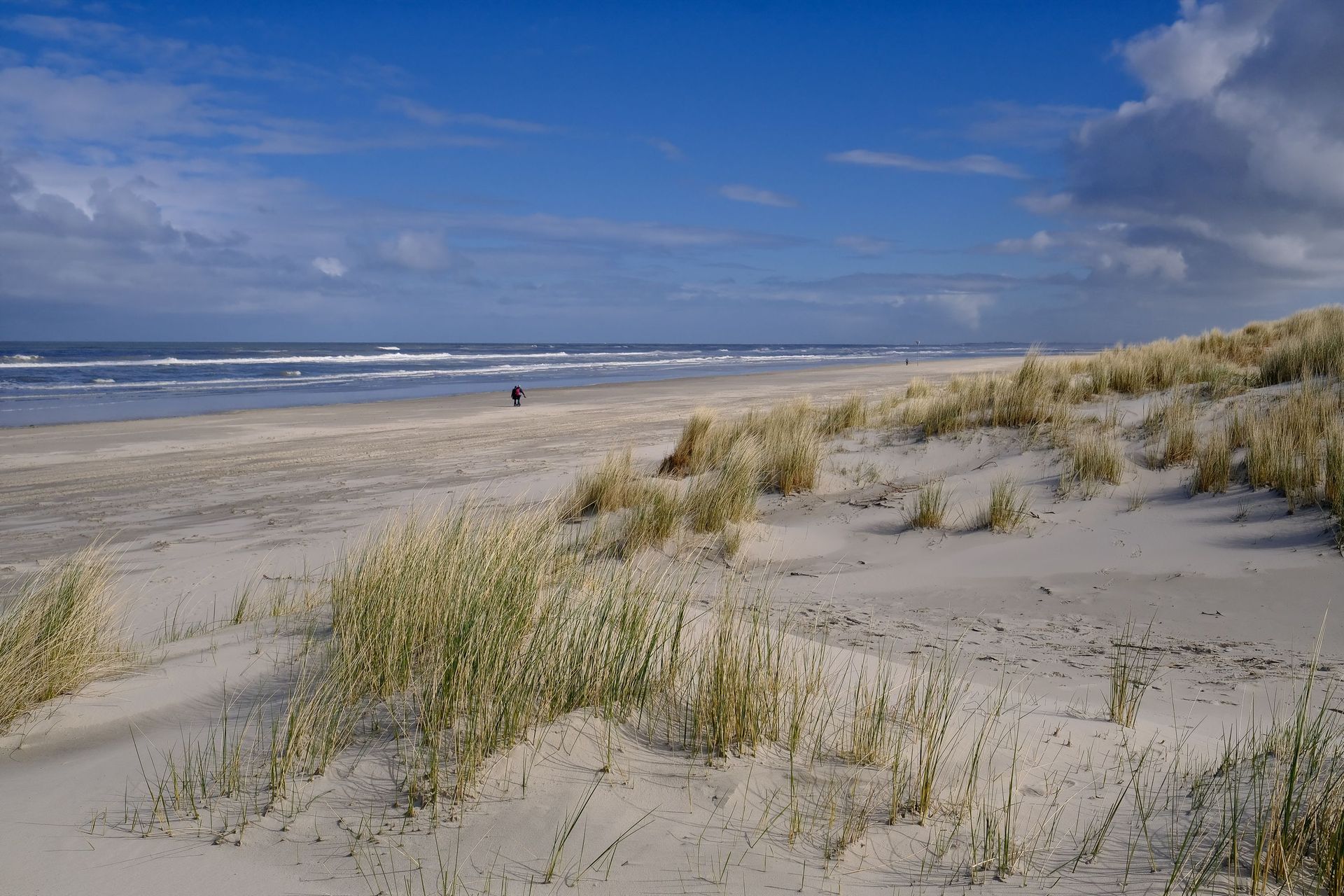
The beaches where the most things wash ashore are those where the sea and wind have free rein. No sheltered bay, no harbour jetty holding everything back, but an open coast facing straight onto the North Sea. That is exactly what you have here, from Zandvoort-Zuid to beyond Bloemendaal aan Zee.
The coast here is also long and wide. In summer, it is packed with beach bars, loungers and people, but outside the season, the stretches between the beach entrances are almost empty. And that is what matters when beachcombing: how many people have walked there before you. A stretch of beach that fifty people have already crossed in the morning has been picked clean. A stretch where you are the first person there has not.
The third advantage is the location. Zandvoort and Bloemendaal aan Zee are close together, and the beach between them can be covered by bike in half an hour. So you can choose where to start, and when beachcombing that is worth more than any trick.
When to go: tides, wind and storms
Three things determine whether you have a good day.
The tide. You want to go beachcombing around low tide. At low tide, the beach is at its widest and the entire stretch that was underwater at high tide is accessible. Start an hour or two before low tide; that way, you walk along with the receding water and continually reach stretches that have just been uncovered. Check the tide times for Zandvoort in advance—they shift by about an hour each day.
The wind. An onshore wind, meaning wind from the west blowing towards the coast, pushes things onto the beach. An offshore wind from the east does the opposite. A westerly wind for a day or two yields more than a week of still weather.
Storms. This is the big one. After a substantial storm, material turns up on the beach that would otherwise never get there, because the sea churns up deeper layers. Natuurmonumenten ranger Paul Begijn describes wind force 9 or higher from the southwest to northwest as the ideal recipe in an article about beachcombing in Zeeland, with October through March the best season. The same applies here. The rule is simple: do not go out during the storm; go the next morning.
In practical terms, that means the beachcombing season starts now. From October to March, the beach is at its richest and emptiest at the same time. You can still find plenty in summer, but you will usually be the tenth person to walk past a shell.

Event venues
The tide line: that’s where it is
Beginners wander all over the beach. That is a waste of time, because almost everything lies along one line: the high-tide line, where the water came to a stop at high tide. You can recognise it by the ribbons of seaweed, foam and light debris lying in a straight line parallel to the sea.
Follow that line and look down. Anything that floats or is light is deposited by the water at the same level, so shells, seaweed, wood and plastic end up together. Also look for multiple lines. After a few days of changing tides, you can sometimes see two or three older high-tide lines one above another, with the highest marking the strongest tide. That is where the heavier material lies.
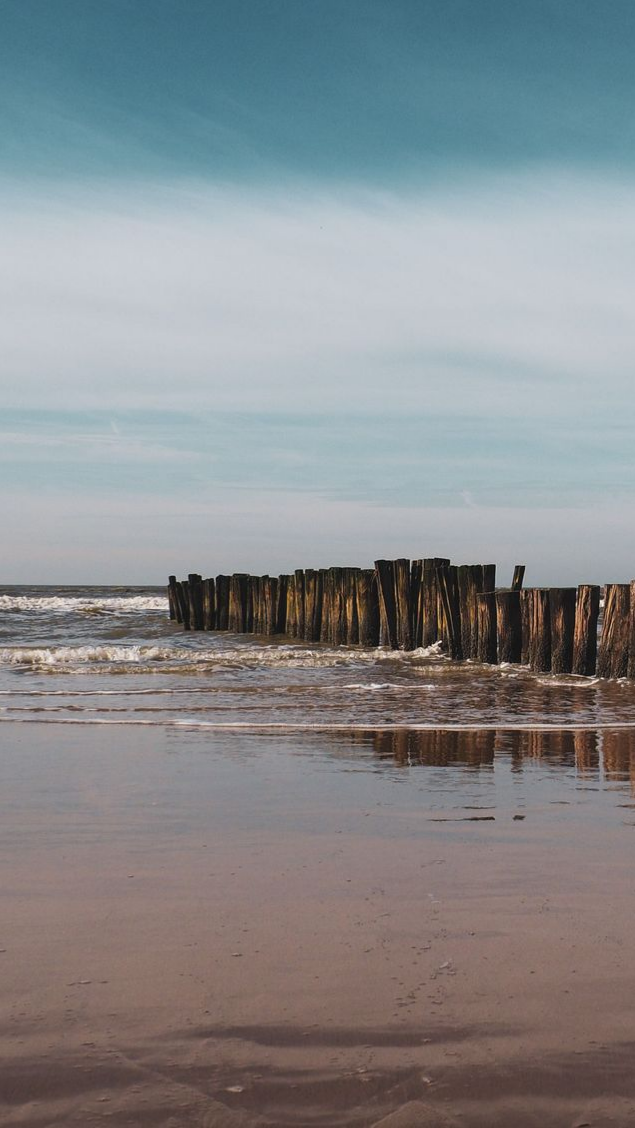
The second worthwhile place is where the current deposits heavier material: by the groynes, in channels and where the beach changes to wet sand. Heavier things such as stones, fossils and teeth end up there instead of high on the dry sand.
And don’t dig around. Beachcombing is about looking, not digging. Those who walk slowly and look carefully find more than those who turn the whole beach over.
What you can find along this coast
An average beachcombing walk on the North Sea coast yields:
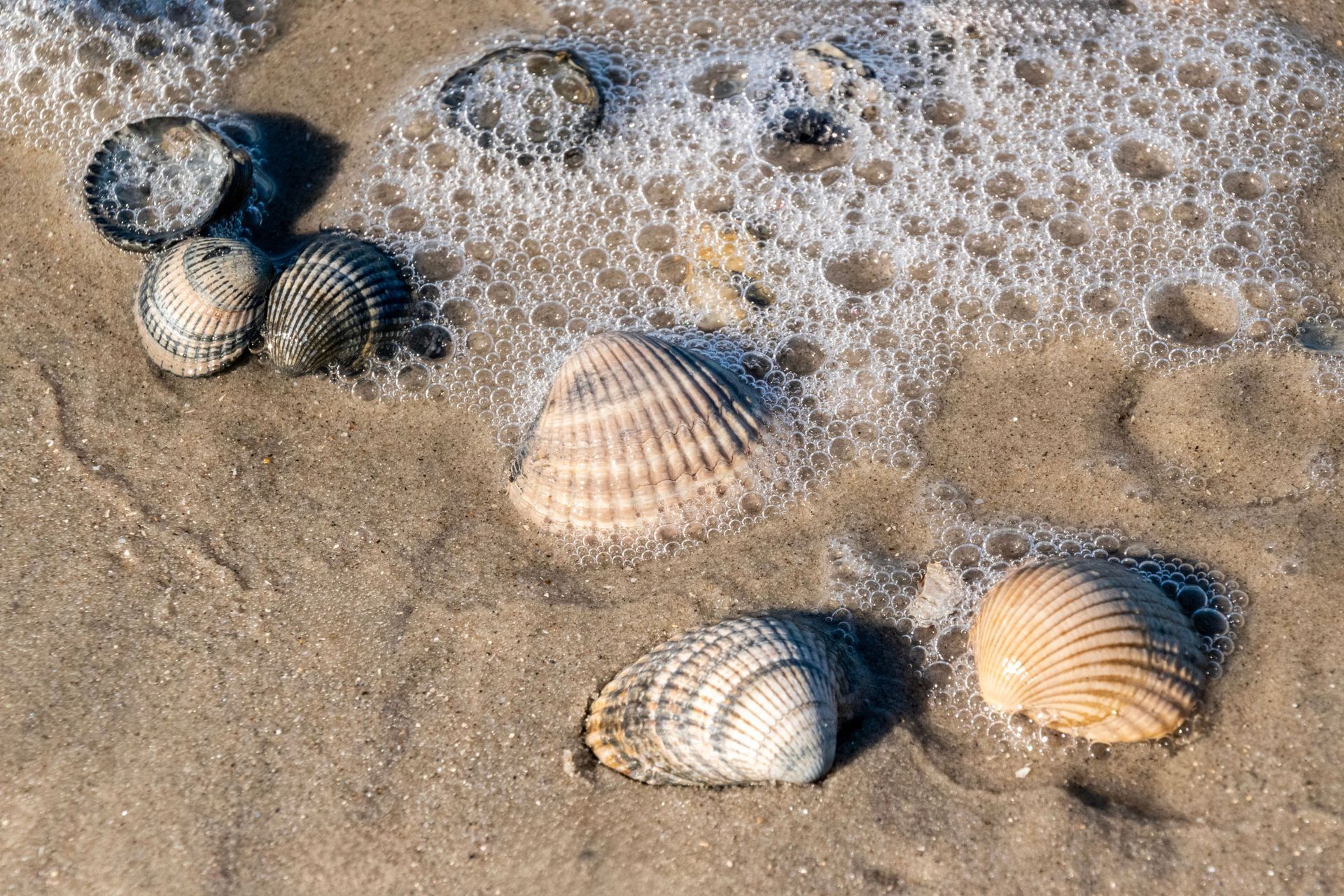
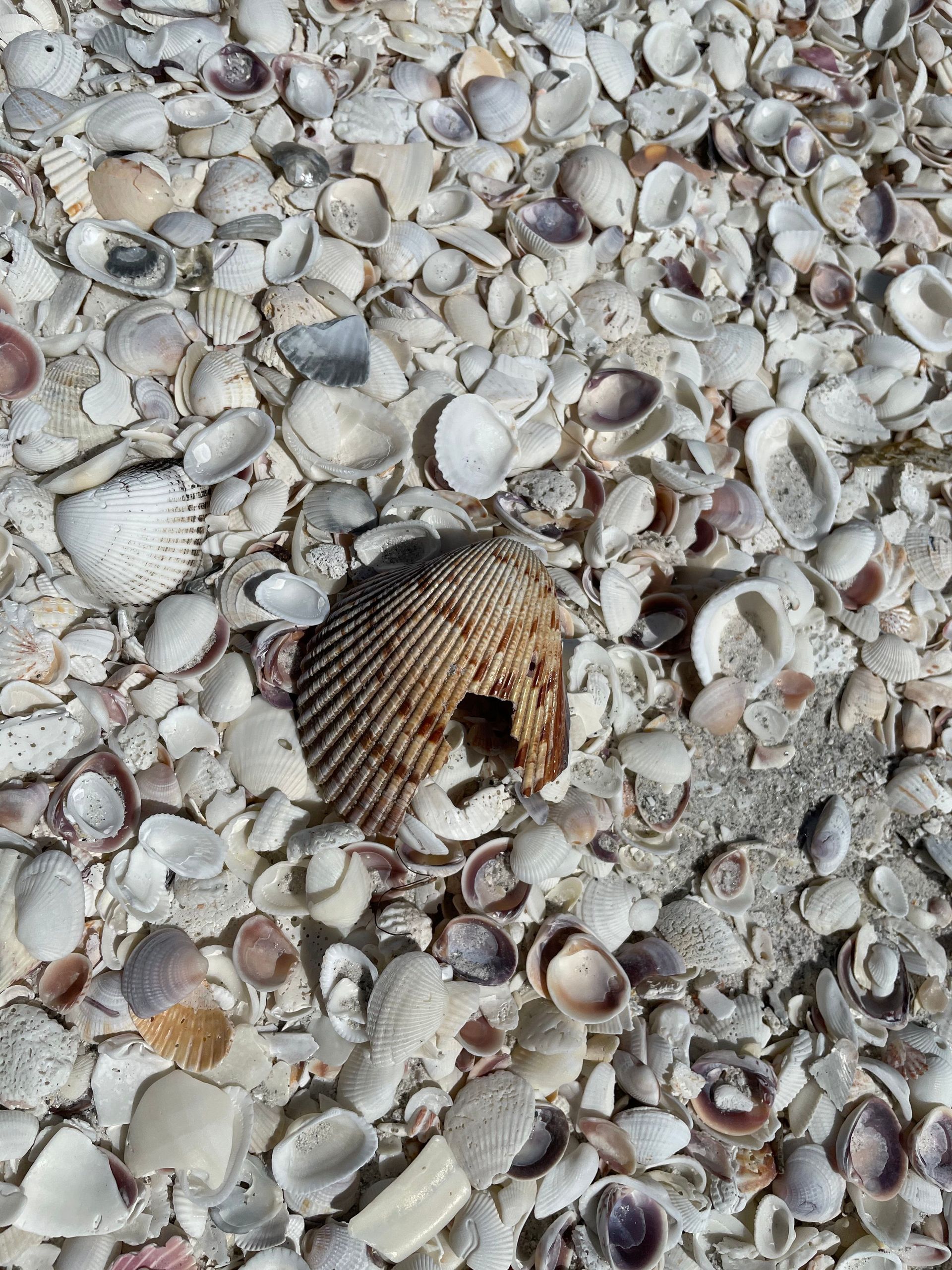
- Shells. Cockles, mussels, trough shells, razor clams, and common piddocks. After a storm, entire beds sometimes wash up at once.
- Crab shells and legs. Often from shore crabs, sometimes from velvet swimming crabs with their blue legs.
- Cuttlebones. That white, lightweight oval thing you see everywhere and that feels like polystyrene. It is the internal skeleton of a cuttlefish, not a stone or a shell.
- Skate egg cases. Black, leathery cushions with four pointed horns, also known as mermaid’s purses. Finding one means you have had a good day.
- Shark egg cases. Rarer ones, from species such as the small-spotted catshark, usually only appear after a storm.
- Wood and rope. Smooth, sea-worn wood, pieces of fishing net, the occasional buoy.
- Plastic. Unfortunately, there is always plenty of it too. See the section on environmental beachcombing below.
What you find varies greatly from day to day. That is precisely why people keep coming back: you never know what the beach has laid out for you.


Event venues
Shark teeth and other prehistoric finds
The find most beachcombers hope for is a fossil shark tooth. Small, triangular, shiny black or brown, usually no bigger than a thumbnail. They are not from sharks that swim in the North Sea today, but from animals that lived here millions of years ago. Zeeland.com mentions shark teeth around 55 million years old in ranger Begijn’s article.
Those same old layers sometimes yield mammoth bones and fossilised shells. This is the kind of find you make once every few years, almost always on beaches that have just been replenished or churned up by a storm. Beach nourishment, where sand from the seabed is pumped onto the beach to strengthen the coast, brings material up from deep below. If you hear that nourishment is taking place somewhere along the coast, that beach will be worth exploring the following year.
Think you’ve found something special? Place it next to a coin, take a photo and check with a nature organisation or a beachcombing museum. Zandvoort has one of its own, the Juttersmu-ZEE-um, where finds collected by generations of beachcombers are on display.
What you may and may not take home
Shells, seaweed, a crab shell and a piece of driftwood—you can simply take them home. No one will object.
Things that clearly belong to someone are a different matter. Washed-up goods legally remain the property of the person who lost them, or of the insurer. If you find something valuable, something from a shipping container, or something you suspect came from a ship, report it to the beachcombing officer. That role falls to the municipality, in practice the mayor. As the finder, you may be entitled to a finder’s fee.
Taking large quantities of washed-up cargo without reporting it is therefore not permitted, however tempting it may be.
There are two things you should always leave alone: dead sea animals and anything that looks like ammunition. Material from the war still occasionally washes up on this coast. Do not touch it, remember the location and call the police.
And keep the dunes in mind: they are a protected nature reserve. Beachcombing is done on the beach, not in the dunes.

Event venues
Beachcombing with children
This is one of the few beach outings that works better in winter than in summer, and children almost always enjoy it. A few things that help:
- Give each child their own little bucket or bag. Collecting is half the fun.
- Turn it into a treasure hunt. Who can be the first to find a cuttlebone, a skate egg case and a shell with a hole in it?
- Set a turning point. One hour out along the high-tide line, then back over the dry sand, is exactly enough for most children.
- Bring a second bag for plastic, and it immediately becomes worthwhile.
- Rinse your finds at home with fresh water and leave them to dry for a day, otherwise the whole house will start to smell of the sea.
Dress them warmly. Wind that feels manageable on the promenade can feel completely different on an empty beach.
How to reach the quieter stretch of beach
This is the difference between an average and a great day of beachcombing. The stretches of beach directly by the entrances in the centre are picked clean first, simply because that is where everyone comes onto the beach. You want the stretches in between, which are anywhere from one to a few kilometres from the nearest staircase.
On foot, it is quite a walk, especially there and back against the wind. By bike, you can get there in ten minutes. Cycle along the boulevard or take the cycle path through the dunes to a more distant entrance, leave your bike there and start walking on a stretch nobody has searched yet. Towards Zandvoort-Noord and farther on to Bloemendaal aan Zee, you can sometimes go half an hour outside the season without seeing anyone.
If you do not have a bike with you, you can hire one from us in Zandvoort. For this kind of trip, an ordinary city bike is perfectly fine, and an e-bike is no luxury when you are cycling back into the wind. If you want to take a fatbike onto the beach itself, first read when cycling on Zandvoort beach is allowed, because it is not permitted everywhere or all year round.


Event venues
What to bring
- Two bags. One for finds, one for rubbish. Sturdy cotton bags work better than plastic ones, because wet sand is heavy.
- Boots or shoes that can get wet. The best spots are on wet sand.
- A windproof jacket. It is always a few degrees colder by the sea than in the village.
- Gloves. There may be glass and sharp metal among the seaweed.
- Your phone. To check the tide times, and to photograph a find next to a coin for scale.
- A small sieve, if you like. Only if you are specifically searching for shark teeth among the shell grit.
What you don’t need: a shovel, a metal detector or a bucket for each person. You walk and look—that’s all.
Beachcombing for a cleaner beach
Some of what washes ashore does not belong there. Plastic, bottle caps, pieces of fishing net, balloon ribbons. It happens naturally when you are already bent over along the high-tide line: anything you pick up goes into the second bag.
There is an organised version of it in Zandvoort too. Stichting Juttersgeluk organises regular beachcombing trips on the beaches of Zandvoort and Bloemendaal and turns the plastic they collect into new products in its own workshop. It has a Jut Unit on the beach by the Paulus Loot beach entrance and a shop in the village. You can join an outing on your own or book a beachcombing morning with a group. If you would rather head out by yourself but still want to contribute, that second bag is all you need.

Event venues
Afterwards: warm up
Two hours walking into the wind will make you hungry. Some of Zandvoort’s beach cafés stay open all year, even when the wind is howling outside, and that is exactly why a November beachcombing morning works so well: cold beach, warm café. Which ones are open in winter and where to sit when you have sand in your shoes can be found in our guide to the best beach cafés in Zandvoort.
If you’ve caught the bug and want a second search, the dunes behind Zandvoort are just as interesting. Remnants from the war can still be found there, as explained in our article about searching for bunkers in the dunes near Zandvoort.
Frequently asked questions
Is beachcombing allowed?
You may take shells, seaweed, driftwood and other natural finds home. Washed-up goods belonging to someone remain the property of the owner or the insurer. If you find something valuable or something from a container, report it to the beachcombing officer, in practice the municipality. As the finder, you may be entitled to a finder’s fee.
When is the best time to go beachcombing?
The morning after a storm, around low tide, between October and March inclusive. Start an hour or two before low tide and walk along with the water as it retreats. Onshore winds from the west in the preceding days help.
Where is the best place to go beachcombing in Zandvoort?
On the stretches of beach between the entrances, not directly by a staircase. Those areas are picked clean first. Towards Zandvoort-Noord and farther on to Bloemendaal aan Zee, it is quietest outside the season. Search along the high-tide line, the line of seaweed and foam running parallel to the sea.
What can you find on Zandvoort beach?
Shells such as cockles, mussels and razor clams, crab shells, cuttlebones, skate egg cases and sometimes shark egg cases, driftwood and rope. After a storm or beach nourishment, there is a chance of finding fossil shark teeth and fossilised shells.
How do you recognise a fossil shark tooth?
By its shape and colour. It is a small triangle, usually no bigger than a thumbnail, with a shiny surface and a dark colour: black, grey or brown. They often lie among the shell grit, so walk slowly and look for something too smooth to be a little shell.
Is beachcombing fun with children?
Yes, especially outside the season. Give each child their own little bag, turn it into a scavenger hunt and set a turning point after about an hour. Bring a second bag for plastic and rinse the finds with fresh water at home.