



The Amsterdam Water Supply Dunes are one of the most beautiful nature reserves near Zandvoort. Endless dune valleys, clear water channels, and large herds of fallow deer make it a popular spot for a day out. Many visitors prefer to explore the area by bicycle, but the situation is slightly different than you might expect. On this page, you can read exactly what is and isn't allowed, what makes the area so special, and which beautiful cycling routes you can take around the dunes starting from Zandvoort. Includes tips on the right bike and the best season.
Table of contents:
- Are you allowed to cycle in the Amsterdam Water Supply Dunes?
- What makes the Waterleidingduinen so special?
- Why cycling through the area is not allowed
- The most beautiful cycling loops around the dunes from Zandvoort
- Combining cycling and walking
- Which bike do you choose for the dunes?
- The best season and time of day
- Practical tips for the road
- Frequently Asked Questions
Are you allowed to cycle in the Amsterdam Water Supply Dunes?
The short answer is no. Cycling through the Amsterdam Waterleidingduinen itself is not permitted. The area can only be explored on foot, with a valid admission ticket. You purchase a day ticket or a season ticket in advance and then set off on foot. Bicycles, dogs, and other vehicles are prohibited at the entrances.
That might sound like a disappointment, but it is no reason to leave your bike at home. The most beautiful cycling routes actually run along and around the dunes, and these are perfectly accessible from Zandvoort. This way, you combine the best of both worlds: a relaxed bike ride through the coastal landscape, with the opportunity to park your bike along the way and take a walk through the reserve.
Event venues
What makes the Waterleidingduinen so special?
The Amsterdam Water Supply Dunes cover over three thousand hectares of dune area between Zandvoort, Vogelenzang, and Noordwijk. The area owes its name to drinking water extraction: water has been purified here for the region since the nineteenth century. This function is still visible in the long, straight water channels that run through the dunes and give the landscape a very distinctive character.
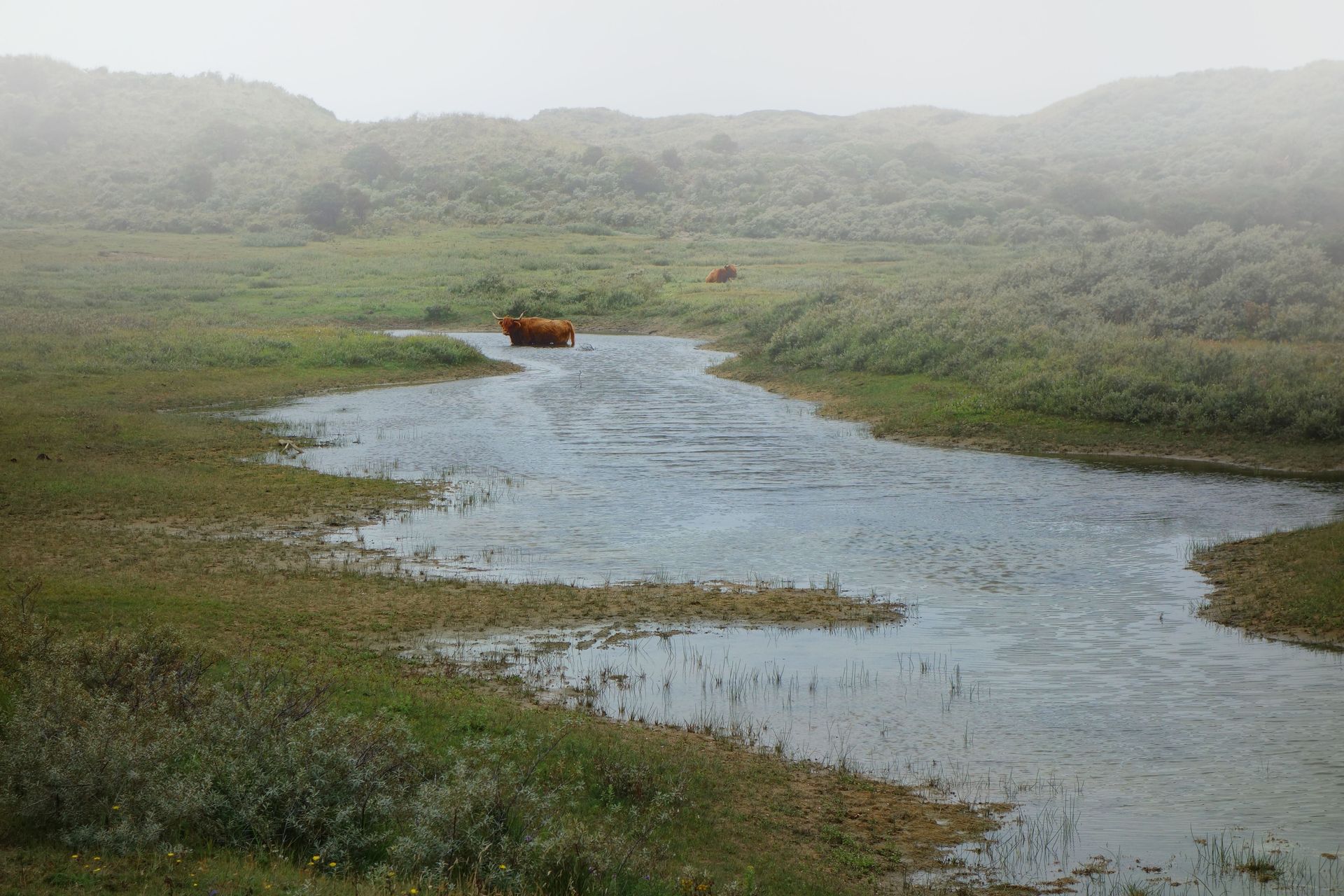
The area is also famous for its fallow deer. You often see them grazing in large groups in the open valleys, especially early in the morning and towards evening. In addition, foxes, rabbits, and countless bird species live there, and in spring, orchids and dune violets color the slopes. Precisely because it is so rich and fragile, strict rules apply to visitors. Those who respect the tranquility are rewarded with one of the quietest nature reserves in the Randstad.
Why cycling through the area is not allowed
The Waterleidingduinen are not just any park. The area plays an important role in the drinking water supply and is simultaneously a protected nature reserve. By keeping visitors on foot, tranquility is preserved for plants and animals, and the narrow paths and steep dune slopes are spared. The large population of fallow deer that you can spot there is partly a result of this.
For you as a visitor, this primarily means making a choice in advance. If you really want to enter the area, park your bike at one of the entrances and go for a walk. If you prefer to cycle on and cover some distance, choose a route around it. Both options start perfectly well from Zandvoort, and you can even combine them into a full day out.
Event venues
The most beautiful cycling loops around the dunes from Zandvoort
From Zandvoort, you can cycle straight into the coast and the dune landscape. Below are three loops, ranging from short and relaxed to a strenuous day trip. The distances are an indication from the center of Zandvoort, and you can easily follow the routes using the cycling junction points in the area.
1. Coastal loop along the edge (approximately 20 kilometers)
A lovely loop for those looking to get out for a few hours. You cycle from Zandvoort via the Zandvoortselaan towards Bentveld and Aerdenhout, and there take the cycle paths that run along the edge of the dunes. Along the way, you have constant views of the dune tops, and at the Panneland entrance on the Zandvoortselaan you can park your bike for a short walk into the area. You cycle back to the coast via the inner dune edge. An ideal trip to get to know the area, also suitable for families.
2. Loop around Zandvoort, Vogelenzang and De Zilk (approximately 35 kilometers)
If you would like to make it a half-day trip, ride a larger loop around the dunes. Via Bentveld and Vogelenzang, you cycle along the eastern side of the area, where the landscape transitions into meadows and, in spring, the first bulb fields. At the Oase entrance in Vogelenzang, you can optionally enter the area for a walk. You return via De Zilk and the coast, hopefully with the wind at your back. Along the way, there are plenty of places to pause and get a breath of fresh air.
3. Long route towards Noordwijk and the bulb region (40 kilometers or more)
For the experienced cyclist, there is the large loop towards Noordwijk. You follow the coast south, make a loop through the bulb region around De Zilk and Noordwijkerhout, and return to Zandvoort via the inner dune edge. During the blooming season, roughly from late March to mid-May, you cycle through a sea of colors past the bulb fields. On an electric bike, this distance is also perfectly manageable for less experienced cyclists.
Combining cycling and walking
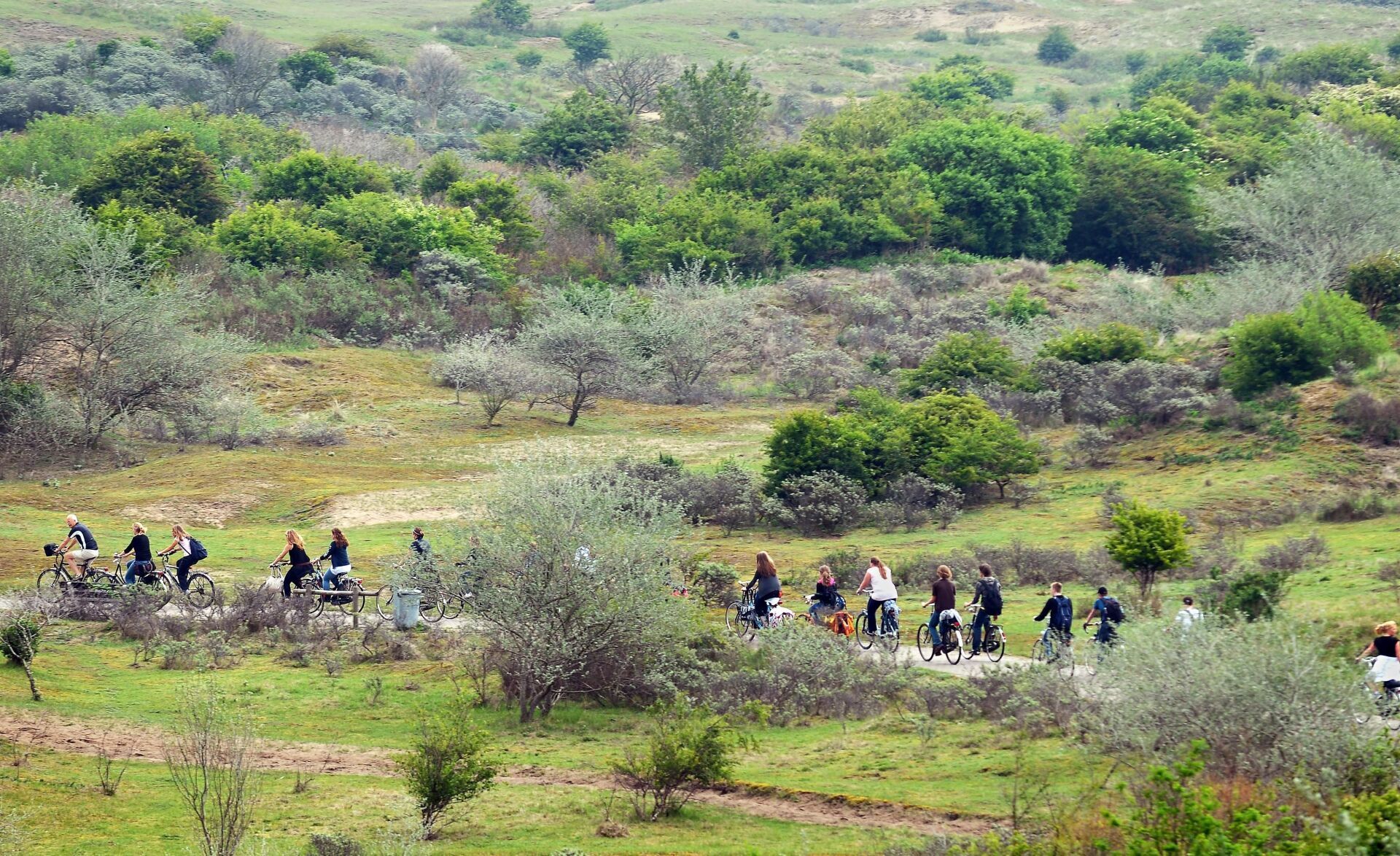
The best thing about a day around the Waterleidingduinen is that you can do both. You cycle a loop around the area, park your bike at an entrance, and take a walk through the dunes. The best-known entrances are Panneland on the Zandvoortselaan, within cycling distance of Zandvoort, and Oase in Vogelenzang on the east side. At both entrances, you purchase an admission ticket and find a place to park your bike.
Please keep in mind that there is quite a bit of walking involved in the area. The walking routes vary from an hour to half a day. So wear sturdy shoes and bring plenty of water, as there is little shade in the dunes. Those who want to take it easy can cycle to one entrance, walk a short loop, and then cycle back to the beach at a relaxed pace.
Event venues
Which bike do you choose for the dunes?
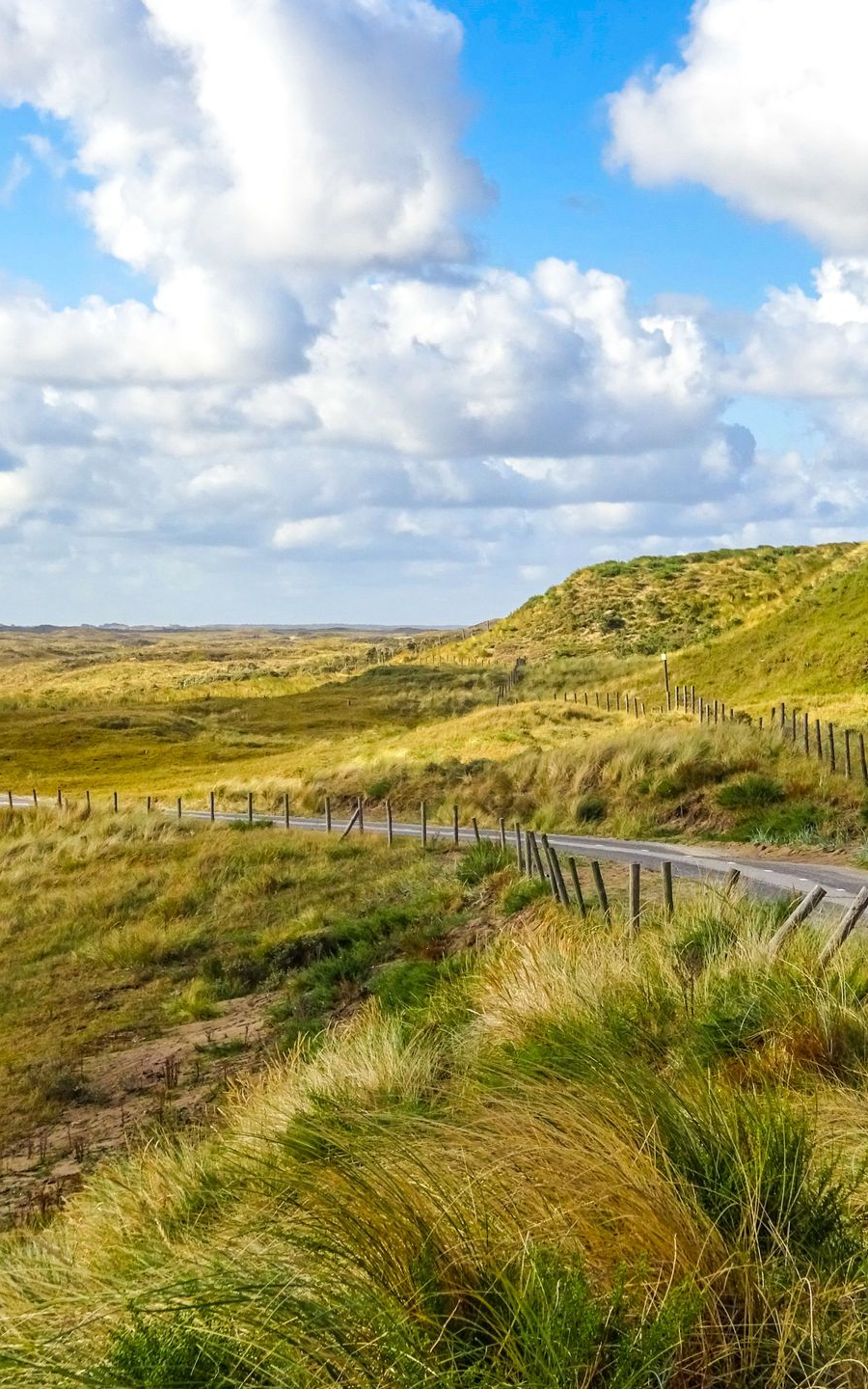
The cycle paths around the Waterleidingduinen are well-paved, but it remains a dune area with significant slopes and often a strong wind from the sea. The right bike makes the difference between toiling and enjoying the ride.
For shorter rides, a regular city bike works perfectly fine. If you want to go further afield, towards the bulb region or Noordwijk, an electric bike is highly recommended: you'll have energy left for the scenery and the headwind will hardly bother you. If you are heading out with the family, we will provide the right sizes, from children's bikes to child seats and trailers. And anyone who wants to take an extended break along the way can bring a picnic bike, ideal for lunch among the dunes.
The best season and time of day
Every season has its charm around the Waterleidingduinen. Spring is a favorite: from late March to mid-May, the bulb fields along the route are in full bloom and the dunes are at their greenest. Summer is ideal for combining the bike ride with a dip in the sea, although the paths can get crowded on the most beautiful days. In autumn, the dunes turn warm colors and the fallow deer are extra active due to the rutting season, a remarkable spectacle. The area is also worth visiting in winter, with crisp skies and plenty of tranquility.
As for the time of day: go early. In the morning, the paths are quiet, the wind is often still mild, and you have the best chance of seeing fallow deer grazing from a distance. It is also beautiful towards the evening, but keep the area's closing times in mind if you want to go hiking.

Event venues
Practical tips for the road
A few things make your cycling day around the dunes even more enjoyable:
- Bring plenty of water. There is little shade in the dunes, and the sun and wind will dry you out faster than you think.
- If you wish to enter the area for walking, purchase an admission ticket online in advance and park your bicycle at the entrance.
- Take the wind into account. Preferably cycle with the sea breeze on the return journey.
- Follow the cycling nodes. This way, you can easily put together your own route and won't get lost.
- Start on time. Early in the morning, the paths are quietest and the animals are most active.
- Reserve your rental bike in advance during the high season, so the right bike will be ready for you.
Frequently Asked Questions
Are you allowed to cycle in the Amsterdam Water Supply Dunes?
No. Cycling through the area itself is not permitted. The Waterleidingduinen can only be visited on foot with a valid admission ticket. The cycle routes run around and along the dunes, and these are easily accessible from Zandvoort.
Do you need an admission ticket to walk?
Yes. To take a walk in the Amsterdam Water Supply Dunes, you purchase a day pass or season pass in advance. You can park your bicycle at the entrance and then explore the area on foot.
What is a nice cycling route around the dunes from Zandvoort?
A loop of about 20 kilometers along the edge towards Bentveld and Vogelenzang is ideal for a few hours. Those who want to cover more kilometers can drive on to De Zilk or towards Noordwijk and the bulb region, which is good for 35 to 40 kilometers.
Can you see fallow deer during the bike ride?
From the cycle paths around the area, you can sometimes already spot grazing fallow deer. Your best chance of seeing them up close is during a walk in the area itself, early in the morning or towards evening.
Which bike is best to rent?
For short rides, a city bike suffices. For longer trips towards the bulb region, an electric bike is more comfortable, especially with a headwind. At Behind the Beach in Zandvoort, you can rent both, plus bikes for the whole family.
Personal advice
At Behind the Beach in Zandvoort, you can rent the bike that suits your trip, from city bikes to electric bikes. Also check out our other cycling routes from Zandvoort and plan your ideal day. We are located within walking distance of the beach and the dunes, so you can cycle straight into nature.